
Last updated November 15, 2026
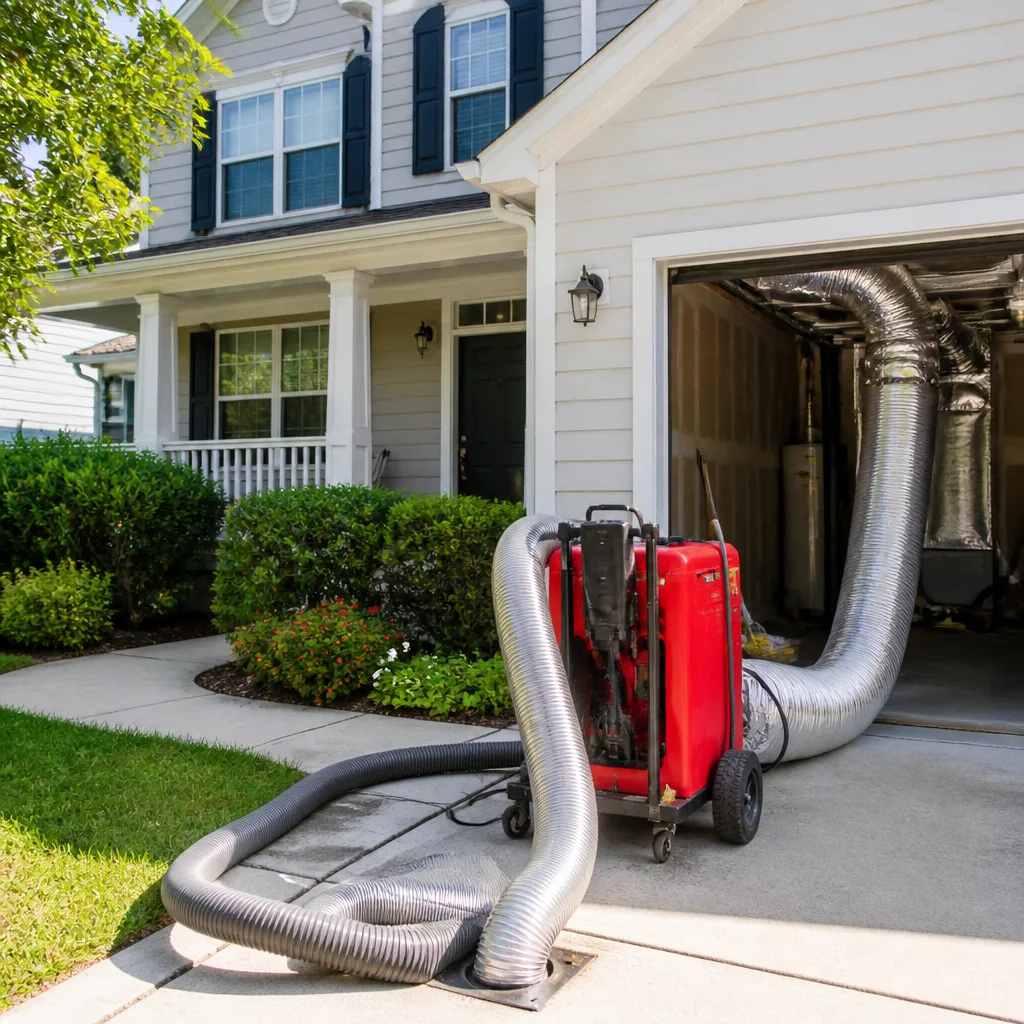 Whole-home duct cleaning
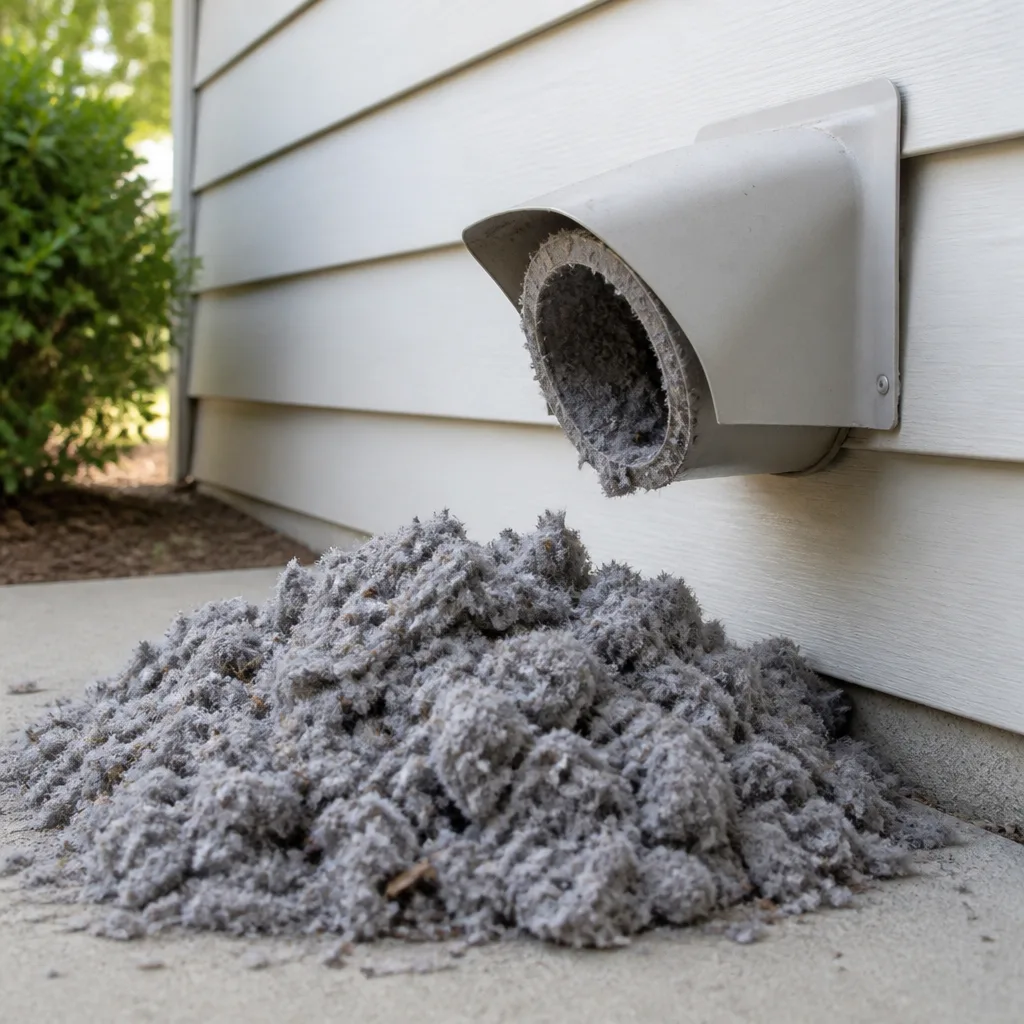 Dryer vent cleaning
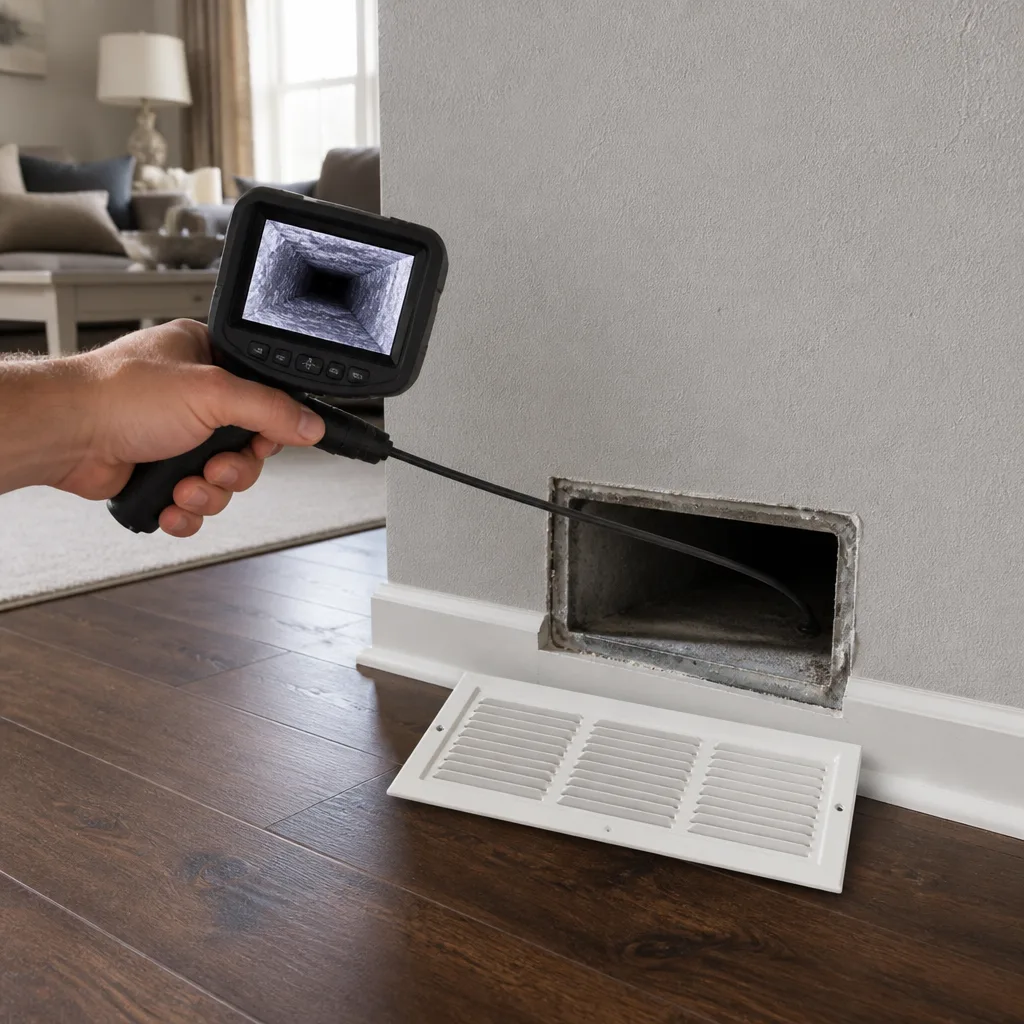 Camera inspection
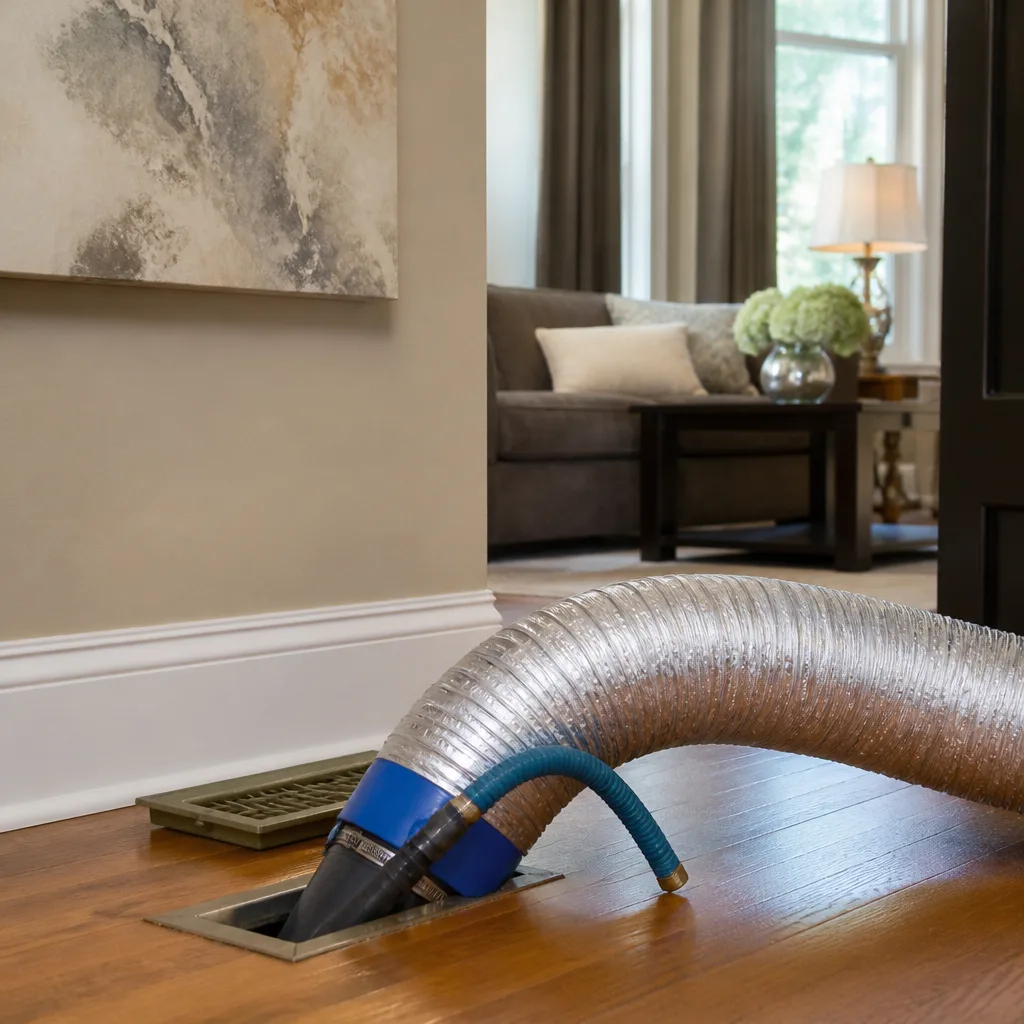 Sanitizing & deodorizing
Whole-system duct and dryer vent check with before-and-after photos - you see exactly what came out of your vents
That "$99 whole-house special" is a bait ad - the real number appears once they are in your hallway, or the "clean" is a shop-vac at the register. We photograph the inside of your ducts before and after instead.
DIY vs Professional Air Duct Cleaning: The Lubbock Homeowner’s Decision Guide
Most homeowners who try to clean their own ducts aren’t lazy. They’re sensible. They see a register full of dust, they own a shop vac, and they can’t see a good reason to pay someone for a job that looks this simple. That’s the misconception worth correcting first: the dust you can see at the register is the smallest part of the problem. It’s the dust sitting in the run behind it – 40 to 80 linear feet of duct in a typical Lubbock home – that matters for air quality and system efficiency, and it sits there for a reason. Consumer tools can’t reach it, can’t agitate it, and can’t generate the pressure differential that lifts it. This guide walks through what you can legitimately do yourself, where the equipment gap turns DIY into a net loss, and how to decide for your home.
Quick Answer
DIY air duct cleaning is only effective for the register face and the first 12 to 18 inches of duct you can physically reach from the boot. Everything past that point needs negative pressure and rotary agitation that no shop vac or consumer duct brush can generate. In homes with flex duct – which dominates Lubbock’s post-1985 housing stock – DIY cleaning carries a real risk of liner tearing that creates the exact air quality and efficiency problems you were trying to solve.
Styles & brands we work with
- Whole-home duct cleaning
- Dryer vent cleaning
- Camera inspection
- Sanitizing & deodorizing
Table of Contents
- What DIY Duct Cleaning Can Actually Clean (And What It Can’t)
- Why Negative Pressure Is the Whole Job
- The Flex Duct Problem in Lubbock Housing
- What Homeowners Should Do Themselves Between Cleanings
- Cost-Benefit: $400 Every 3-5 Years vs. $200/Year of DIY
- A Clear Scope Division: What’s Yours, What’s Ours
- Safety Limits: When to Stop and Call Someone
- Signs It’s Time to Call a Professional
What DIY Duct Cleaning Can Actually Clean (And What It Can’t)
Let’s start with an honest accounting of what a homeowner with a shop vac, a dryer vent brush, and a Saturday afternoon can genuinely accomplish.
What DIY legitimately reaches
- The register face and grille. Dust builds up on the visible face of the supply register and can be wiped or vacuumed away easily. This is real work that improves air quality at the point of entry.
- The first 12 to 18 inches of duct behind the register. A flexible brush can usually navigate this far into a straight run. That’s the extent of it.
- The return grille face. Returns pull air back into the system and collect more dust than supplies do. The grille itself is easy to remove and clean.
- Accessible flex duct near a boot. If the duct is exposed in a crawlspace or utility area, a light hand pass with a soft brush can remove surface dust.
What DIY can’t touch
Now the harder half. The average home has 40 to 80 linear feet of duct per run between the register and the plenum. That’s the section that collects the fine dust, the settled particulate, and in Lubbock’s case, the dust that blows in from open windows, construction, and the region’s naturally high particulate load. None of it is accessible through a register with a consumer tool. Reaching it requires cutting access points, inserting a rotary brush on a flexible shaft, and pulling vacuum on the far end so the debris has somewhere to go.
That gap – the visible 18 inches versus the invisible 40 to 80 feet behind it – is where most DIY attempts break down. Cleaning the register is satisfying because you can see the difference. But the air you and your family breathe most of the day is coming through the parts you can’t see.
Why Negative Pressure Is the Whole Job
Here’s the piece most homeowner guides skip entirely: duct cleaning isn’t brushing. It’s source removal, which is the standard term for pulling contamination out of the system rather than just dislodging it into the air you breathe. Source removal depends on a specific technical condition – negative pressure in the duct system while the cleaning tool is running.
Negative pressure means the air inside the duct is at a lower pressure than the room it opens into. When you crack a register loose, air rushes in rather than blowing dust out. That’s how you keep debris contained. The professional standard for source-removal cleaning generally calls for around 1 inch of water column (1″ WC) of negative pressure in the system, held while rotary agitation knocks material off the duct walls.
Why consumer tools can’t generate it
- Shop vacs pull a small volume of air through a narrow inlet. They move enough air to suck up visible debris at the hose end, but they can’t pull total duct system pressure down to a working negative pressure. The physics don’t allow it.
- Consumer “duct cleaning” attachments are agitation tools, not containment tools. They knock dust loose. Without negative pressure, that dust either resettles in the duct or drifts into the room.
- You need a HEPA-filtered vacuum on a sealed connection to the plenum or a cut access point. That’s a specific piece of equipment – Abatement Technologies negative-air systems are the reference standard in contamination-control work, and it’s what we run on elevated-contamination jobs.
This is the equipment gap in one sentence: a consumer tool can move dust from a duct into your living room, but a shop vac and a home-use attachment cannot pull a whole duct system into negative pressure and hold it there while brushes run. That’s why air duct cleaning done right looks more like remediation work than housekeeping.
What professional tools actually do
On a standard residential job we run a Rotobrush rotary brush system for wall agitation and a Nikro HEPA-filtered vacuum to hold negative pressure and contain everything the brush loosens. The combination is what makes source removal possible – agitation with containment. On houses with heavier contamination (post-renovation dust, visible debris at the registers, musty return air), we step up to Abatement Technologies negative-air equipment. Our technicians have up to 9 years of experience with this tooling, and the difference between doing the job and doing it right usually comes down to whether containment is maintained through the whole run.
The Flex Duct Problem in Lubbock Housing
Most of Lubbock’s housing stock built after 1985 uses flex duct – the insulated, wire-reinforced plastic hose that runs from the trunk line to each register. It’s fast to install, it’s cheap, and it’s everywhere in newer West Lubbock subdivisions and the neighborhoods that filled in around them through the 1990s and 2000s.
Flex duct is also the duct type most vulnerable to improper cleaning. Its interior liner is a thin plastic film stretched over a wire helix. That liner tears if you run a stiff brush against it at the wrong angle, or if you draw more vacuum than the duct can handle without collapsing. A torn liner leaves exposed fiberglass insulation facing the airstream – and every cubic foot of air that passes through the duct afterward carries fiberglass particulate into the room.
Why DIY is a particular risk with flex duct
- Consumer brushes are usually too stiff. The wire brush meant for metal duct work will score and tear the liner on a flex run.
- Shop vac suction can collapse a flex duct. Without careful pressure management, a high-powered shop vac pulls the liner inward, and the duct may not spring back to its original shape.
- Improper insertion angle kinks the wire helix. Once a flex duct kinks, airflow drops permanently, and the duct can’t be “un-kinked” without replacing the run.
- There’s no way to see the damage afterward. A homeowner who tears a liner has no easy way to know it happened. It shows up over the following months as more dust, more allergy symptoms, and a system that doesn’t balance.
Proper flex duct cleaning requires the right brush density, correct insertion and withdrawal technique, and vacuum pressure tuned to the duct – not just pulled full blast. That’s a skill that comes from doing it hundreds of times. It’s the main reason we don’t recommend DIY cleaning on any home with flex duct, and it’s why when a liner does get damaged, Air Duct Repair matters as a separate service: cleaning the surface doesn’t fix a compromised duct.
What Homeowners Should Do Themselves Between Cleanings
None of the above means homeowners shouldn’t touch the system. There’s a meaningful list of tasks that genuinely add value – they just happen between professional cleanings, not instead of them.
Monthly and seasonal DIY checklist
- Change or check the air filter. In Lubbock’s dusty spring season, monthly checks are the norm rather than the exception. A clogged filter strains the blower and forces dust back into the ducts.
- Clean register faces and grilles. A damp cloth on the supply and return grilles every few weeks keeps the most visible dust layer under control.
- Vacuum return grilles from the room side. A shop vac with a brush attachment on the return face is safe and effective – and it doesn’t reach into the duct, which is where the risk lies.
- Inspect the dryer vent. Pull the dryer out, disconnect the vent, and check for lint buildup once or twice a year. This is a safety task, not a maintenance task – more on that below.
- Watch for register dust patterns. Streaking around a register from the room side often means supply air is picking up dust somewhere upstream. Note it and mention it when you book a professional cleaning.
- Check the condensate drain and filter housing. On the air handler side, a clean filter box and a clear drain keep the system working without calling for help.
What not to do
Don’t run a wire brush more than a foot or so into any duct run. Don’t point a shop vac nozzle into a live system with the air handler running. Don’t try to remove a register and reach your arm in for a “quick pass” – the risk of tearing a flex liner outweighs the dust you’ll remove. And if you notice a musty smell or visible mold at a register, stop touching the system and get it looked at; that’s a contamination situation that requires remediation-grade equipment, not a homeowner tool.
Cost-Benefit: $400 Every 3-5 Years vs. $200/Year of DIY
The math on this one usually surprises homeowners. The instinct is that DIY saves money. In practice, the two paths cost roughly the same over a decade – but they produce very different results.
Typical estimated costs
| Approach | Cost per cycle | Frequency | 10-year total |
|---|---|---|---|
| Professional whole-system cleaning | Estimated $350-$550 per system (typical Lubbock range; flat price per system, agreed in writing before work starts) | Every 3-5 years | Estimated $700-$1,500 |
| DIY supplies (shop vac, brushes, filter stock, time) | Estimated $150-$250 per year | Annual | Estimated $1,500-$2,500 |
| Duct damage repair from improper cleaning | Estimated $150-$600 per run, if it happens | Variable | Variable, potentially significant |
These are typical estimates for Lubbock, not quotes for your home. The written estimate sets the final price.
The numbers that don’t show up in the table
- DIY time is real time. A weekend of duct cleaning once a year for a decade is 40 to 80 hours of work that isn’t cleaning the parts of the system that matter.
- The result quality is different. Professional cleaning removes contamination from every run, the plenum, and the air handler. DIY removes contamination from the register and the first foot of duct.
- Risk of liner damage is one-directional. A homeowner can only damage the system. Cleaning it well requires knowing what you’re doing with the tooling.
- Lubbock’s dust load means frequency matters. Homes here hit the “needs cleaning” threshold faster than in lower-dust regions, which is exactly why DIY supplies every year add up.
A professional whole-system cleaning every 3 to 5 years costs about the same as a decade of DIY supplies and time. It also produces a materially better result. That’s the honest cost-benefit case – and it’s why we push back on the assumption that the DIY route is cheaper. It’s not. It just feels like it is.
A Clear Scope Division: What’s Yours, What’s Ours
The cleanest way to think about this is with a divided scope. Some tasks belong to the homeowner. Others only make sense with professional equipment. The split looks like this:
The homeowner’s side of the line
- Filter changes and filter checks (monthly during Lubbock’s dusty season, quarterly otherwise)
- Register and grille cleaning from the room side
- Return grille vacuuming from the room side
- Dryer vent lint inspection and clearing of accessible lint near the dryer connection
- Visual inspection of exposed flex duct in crawlspaces and utility areas, looking for kinks or visible damage
- Noting unusual dust, smells, or noise and flagging it when you call for professional service
The professional side of the line
- Negative pressure containment and HEPA-filtered extraction
- Rotary agitation of the full run using Rotobrush tooling at pressures tuned to your duct type
- Access-point cutting and proper resealing
- Cleaning of the air handler, plenum, and coil-adjacent components
- Elevated-contamination work using Abatement Technologies negative-air equipment
- Air duct repair when the run itself is compromised
- Dryer vent cleaning where lint has compacted past what’s reachable from the dryer side
That line is worth knowing precisely, because it tells you what to stop feeling guilty about. You aren’t failing at maintenance by not cleaning the ducts yourself. You’re doing the part that’s yours, and calling for the part that requires equipment you don’t have, and shouldn’t buy.
Safety Limits: When to Stop and Call Someone
Two categories of duct work have real safety stakes for a homeowner – and both are worth naming plainly.
Dryer vent safety
Lint in a dryer vent is combustible, and dryer vent fires are a leading cause of residential house fires nationally. When you pull the dryer out and look behind it, you’re doing the most important safety check a homeowner can do on the system. What a homeowner can’t do is clear lint that’s compacted 15 to 25 feet down a rigid metal or flexible run – and that’s where the risk concentrates. Professional dryer vent cleaning clears the entire run, not just the accessible end. If it’s been more than a year since yours was cleared, that’s a call worth making. A fire hazard doesn’t announce itself.
Duct contamination and airflow limits
A few situations sit outside homeowner territory entirely:
- Visible mold at a register or on the duct interior. Stop cleaning and get it evaluated. Remediation is not the same as cleaning, and it requires containment equipment and specific protocols.
- Pest activity inside the duct system. Rodents and insects nest in ducts, and disturbing them without containment spreads contamination. Get professional eyes on it before you touch anything.
- Collapsed or kinked flex duct. If you can see a flex run that’s crushed, kinked, or sagging, no amount of cleaning fixes it. The run needs Air Duct Repair, not cleaning.
- Airflow problems you can’t trace. A room that stays hot or cold, or a system that runs constantly, usually traces back to a duct issue that needs to be diagnosed, not vacuumed.
- Post-renovation dust. Drywall dust and construction particulate load the system heavily. Standard homeowner cleaning won’t clear it, and the dust is fine enough to settle into insulation.
When in doubt, stop. The downside of a professional estimate is zero. The downside of getting it wrong on a safety-relevant issue is real.
Signs It’s Time to Call a Professional
If any of these sound like your home, the DIY conversation is over and it’s time to talk to a professional:
- Visible dust blowing out of registers when the system starts up
- A musty or stale smell that follows the airflow
- Allergy symptoms that worsen when the HVAC system runs
- Increased dust on surfaces within days of cleaning
- Lopsided airflow – some rooms fine, others weak
- Recent renovation, roofing, or major remodeling work in the home
- Move-in to an older home with unknown duct history
- Dryer that takes longer than it used to, or a dryer vent that hasn’t been cleaned in over a year
- Visible kinks, sagging, or damage on exposed flex duct runs
- It’s been 3 to 5 years since the last professional cleaning
Two or three of those showing up together is usually the signal. If you’re also running a Honeywell or Aprilaire air quality system in the home – filtration, humidity control, or ventilation – the ducts are the foundation of everything downstream. Cleaning them is the first step in getting those systems to do their job. We’re trained on both platforms, which means we know how to clean ducts without disrupting the components connected to them.
See the difference
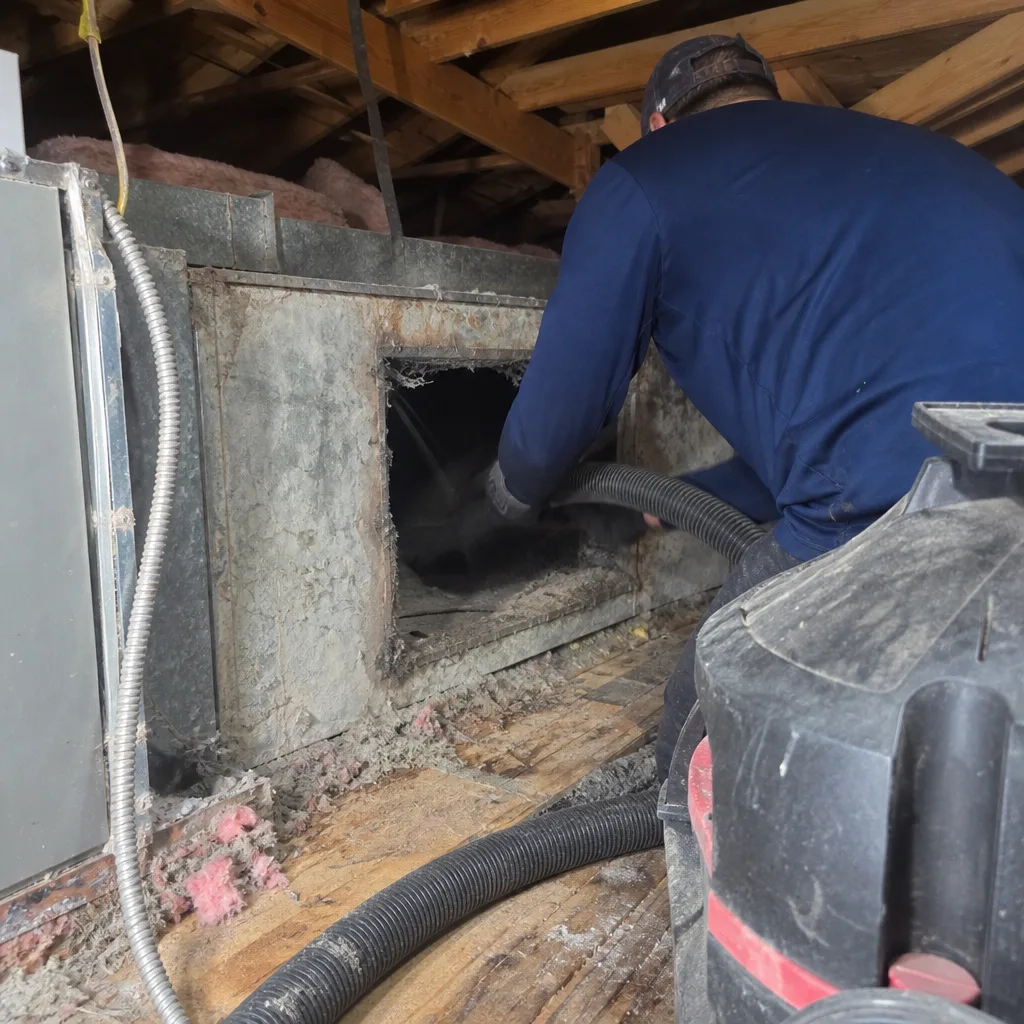 Before
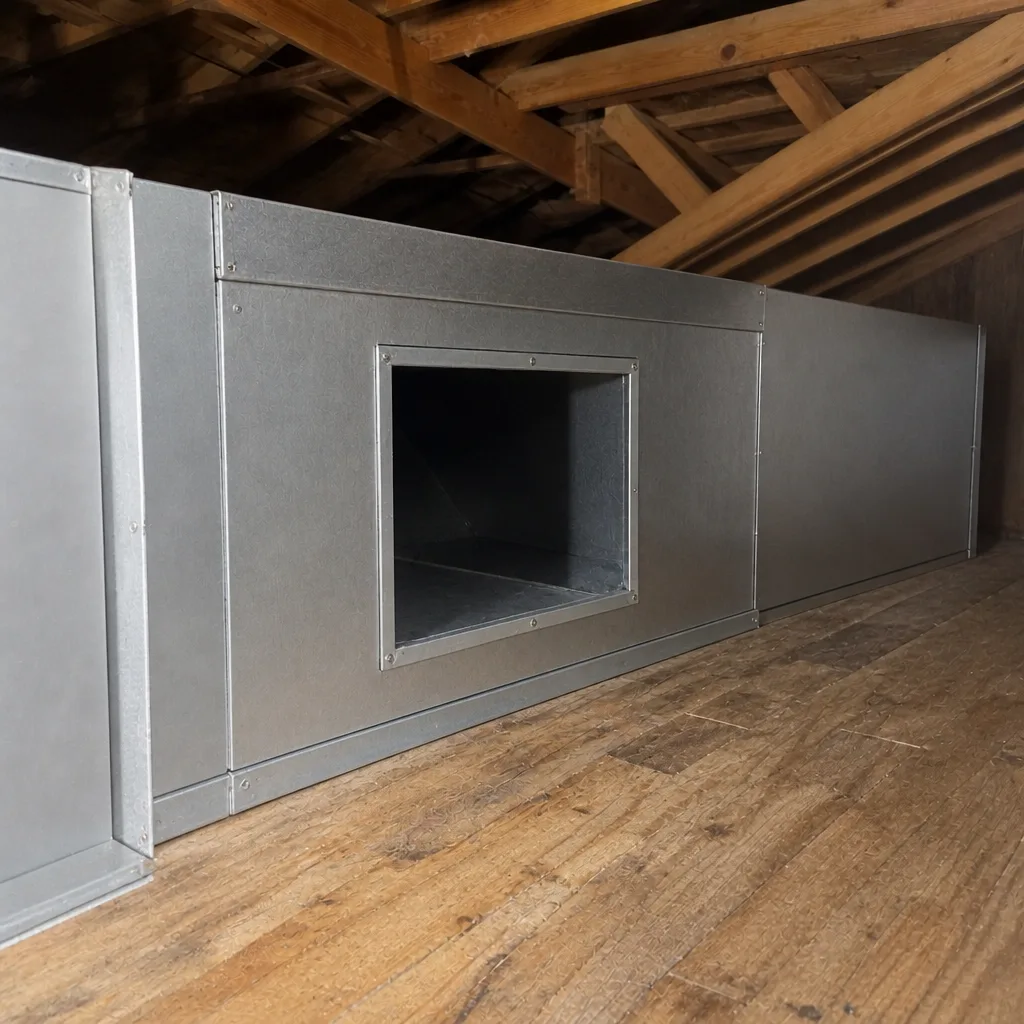 After
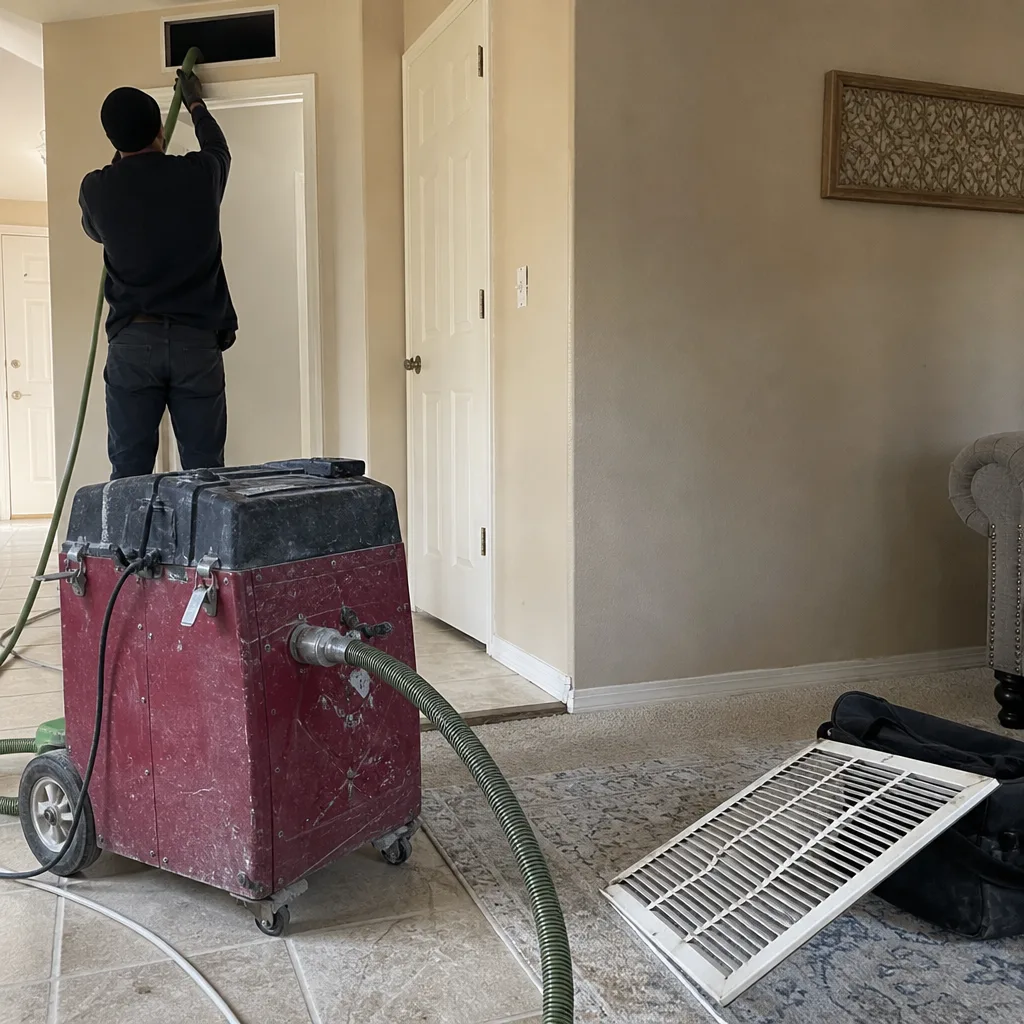 Before
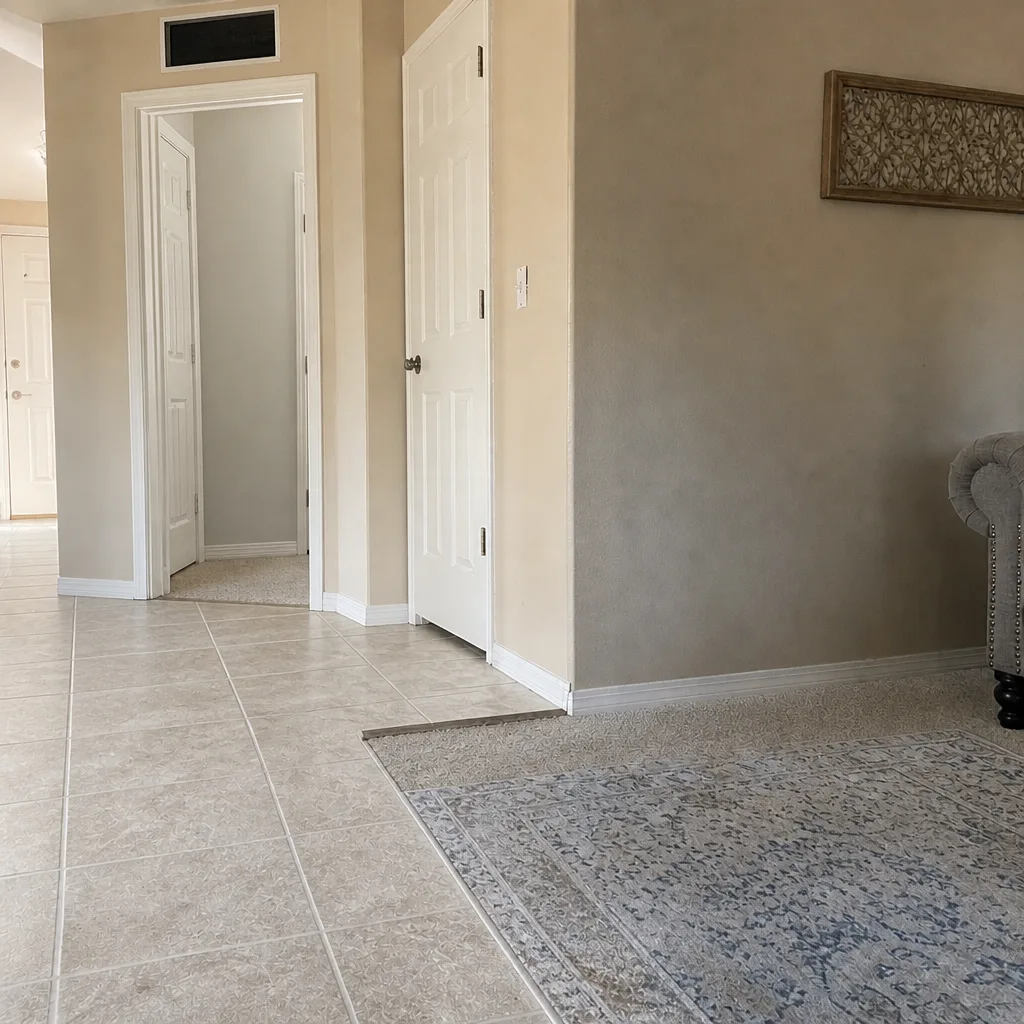 After
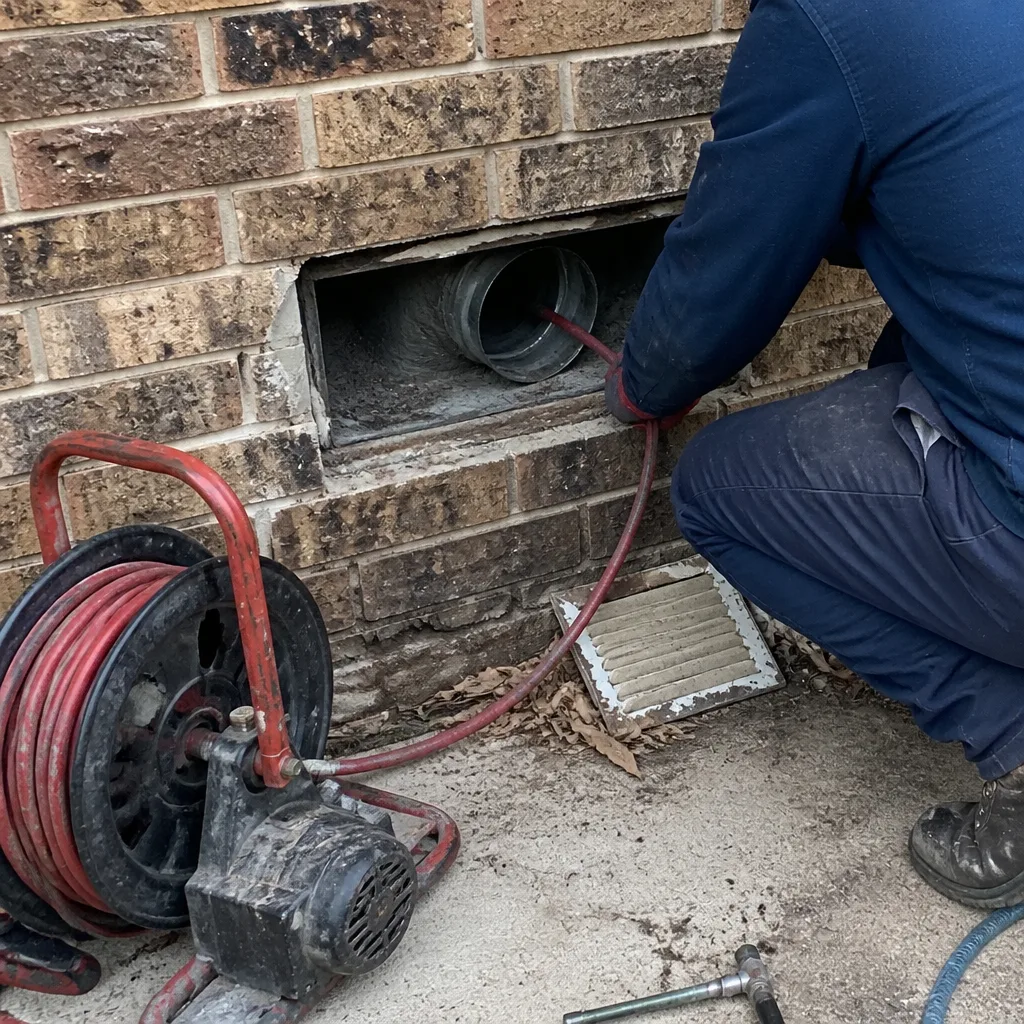 Before
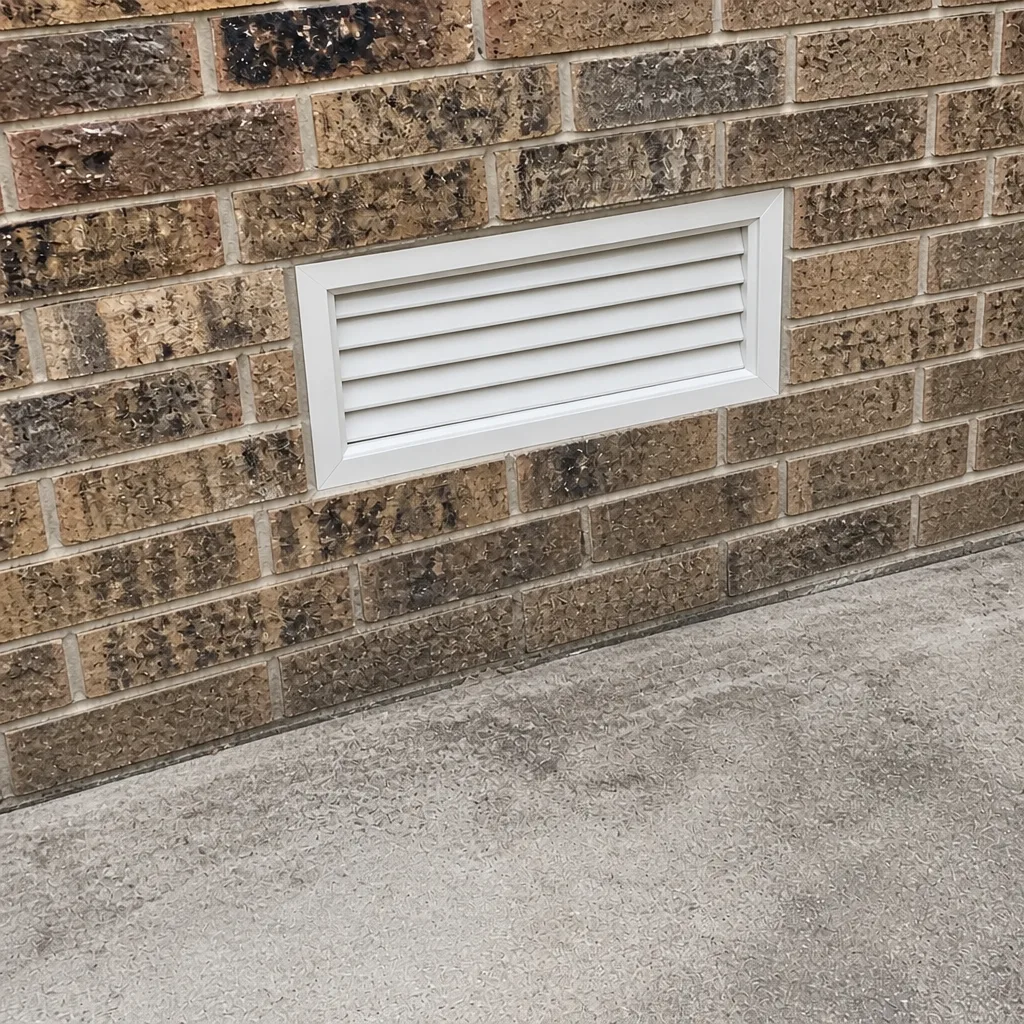 After
Common Mistakes to Avoid
- Assuming the register is the duct. The visible dust at the register is roughly 5% of what’s in the system. Cleaning the face and declaring the job done is the most common DIY mistake in Lubbock homes.
- Running a wire brush into flex duct. Flex liners tear easily, and the tear isn’t visible from the register side. The result is fiberglass particulate entering the airstream, which is worse than the dust you started with.
- Cranking a shop vac to full suction on a flex run. High suction without pressure management collapses the liner. The duct may never fully recover its shape, and airflow drops permanently.
- Cleaning with the air handler running. Every bit of dust you loosen gets pushed into the next room or pulled back into the return. Turn the system off before touching anything, and hire a professional who maintains negative pressure while the tooling is in use.
- Skipping the return side. Returns collect more dust than supplies and they’re the main reason a cleaned home still smells musty a week later. If a DIY pass only covers supplies, half the system is untouched.
- Ignoring the dryer vent entirely. Homeowners focus on the visible dust in the HVAC system and forget the vent behind the dryer. Lint there is combustible, and “I’ll get to it” is how most dryer fires begin.
- Cleaning ducts but not addressing a kinked or collapsed run. If a flex duct is crushed, cleaning it produces a clean duct that still can’t move air. The repair matters as much as the cleaning.
When to Call a Professional
Call a professional when the signs line up: visible dust blowing out of registers, a musty smell that follows airflow, allergy symptoms that spike when the system runs, recent renovations, a move-in to an older home, or three or more years since the last cleaning. In homes with flex duct, we recommend skipping DIY cleaning entirely and calling for an estimate – the liner damage risk outweighs any savings. If you notice musty smells, visible mold, or pest activity, call immediately; those are remediation-scope situations, not maintenance. Duct Cleaning Lubbock offers free estimates in Lubbock – call (833) 958-4715. We answer 24/7. Fast dispatch from 7am to 7pm, Sunday through Friday.
Frequently Asked Questions
Typical whole-system air duct cleaning in Lubbock runs an estimated $350-$550 depending on home size, system layout, and contamination level. We don’t quote per vent – the flat price is per system, and it’s agreed in writing before any work starts. Call (833) 958-4715 for an exact quote. Estimates are free.
You can vacuum the visible register faces, grilles, and the first foot or so of duct near the boot. You cannot source-remove 40 to 80 feet of duct with a shop vac – the equipment can’t generate the negative pressure needed, and on flex duct it can damage the liner. For the reachable parts, sure. For the rest, call.
The cheapest quotes are usually for surface-level register cleaning, not whole-system source removal. True cleaning requires HEPA-filtered vacuum equipment, rotary agitation, and containment procedures that cheap operations often skip. Since we price per system with one flat price agreed before work starts, you know what you’re getting before we arrive – and before-and-after photos of your own ducts confirm it was done.
Ask for before-and-after photos of your own duct interiors at each register. A professional job produces visible change on the camera shots, and a proper company will show you. We photograph before and after on every job. If a contractor won’t, that’s the answer. Call (833) 958-4715 for a free estimate.
Every 3 to 5 years for most Lubbock homes, and closer to every 3 years if you have pets, allergies, or have done recent renovations. Lubbock’s dust load is heavier than in most regions, which pushes the interval shorter than the national guideline. If it’s been longer than 5 years and you’ve never had it done, it’s worth a call.
Yes, and it’s the most common reason we get called to repair duct systems after a DIY attempt. Flex duct liners tear under stiff brushes, and they can collapse under excessive shop vac suction. Once the liner is compromised, professional repair is the only fix – cleaning doesn’t restore it. That’s the case against DIY on flex-duct homes in one sentence.
The Bottom Line
DIY duct cleaning isn’t useless – it’s just limited to a small, visible slice of the system. Register faces, grille cleaning, filter changes, and dryer vent inspection are genuinely valuable homeowner tasks, and they belong on your monthly checklist. But the 40 to 80 linear feet behind each register requires negative pressure, rotary agitation, and containment – none of which a consumer tool generates. On Lubbock’s flex-duct housing stock, DIY cleaning carries a real risk of liner tearing that costs more to repair than the cleaning would have. A professional whole-system cleaning every 3 to 5 years costs about the same as a decade of DIY supplies, produces a materially better result, and doesn’t risk your duct work. Duct Cleaning Lubbock offers free estimates in Lubbock – call (833) 958-4715. We answer 24/7. Fast dispatch from 7am to 7pm, Sunday through Friday.
Written by the team at Duct Cleaning Lubbock.