
Last updated November 15, 2026
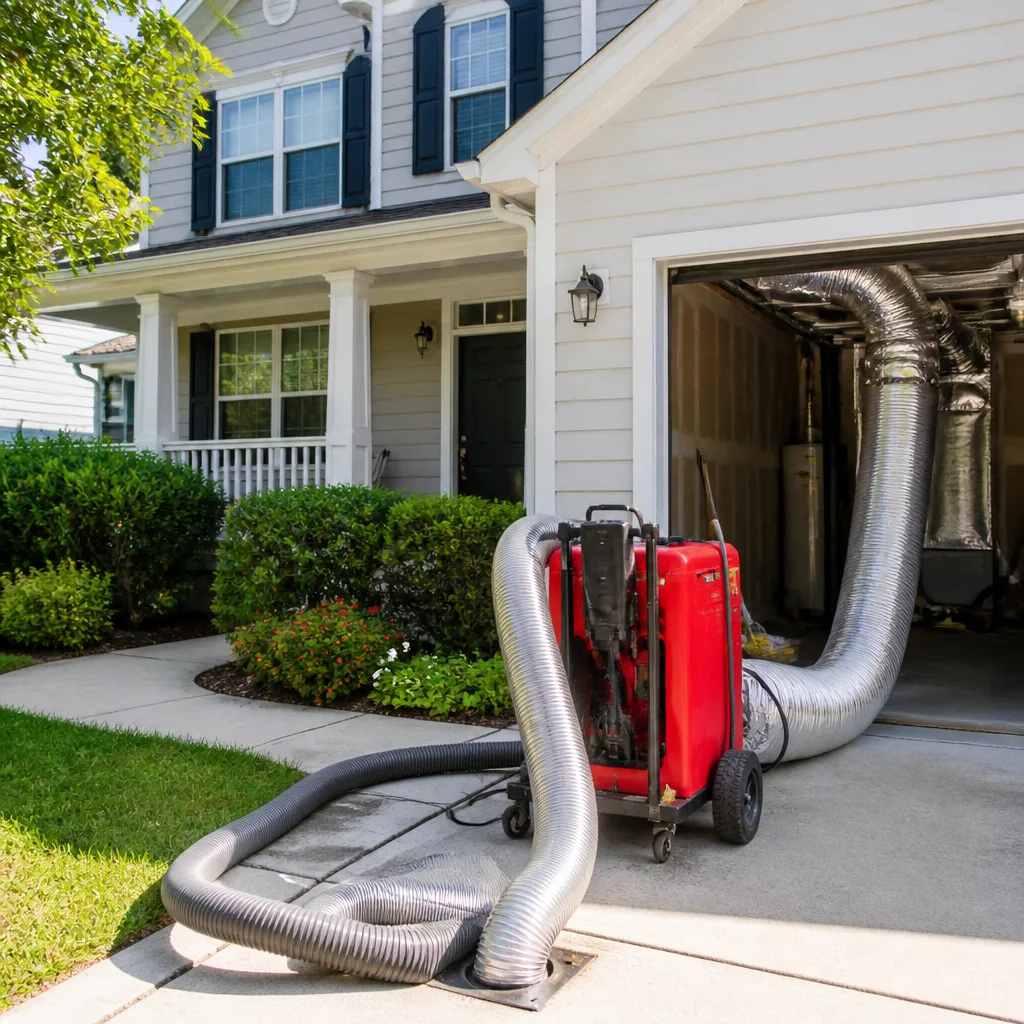 Whole-home duct cleaning
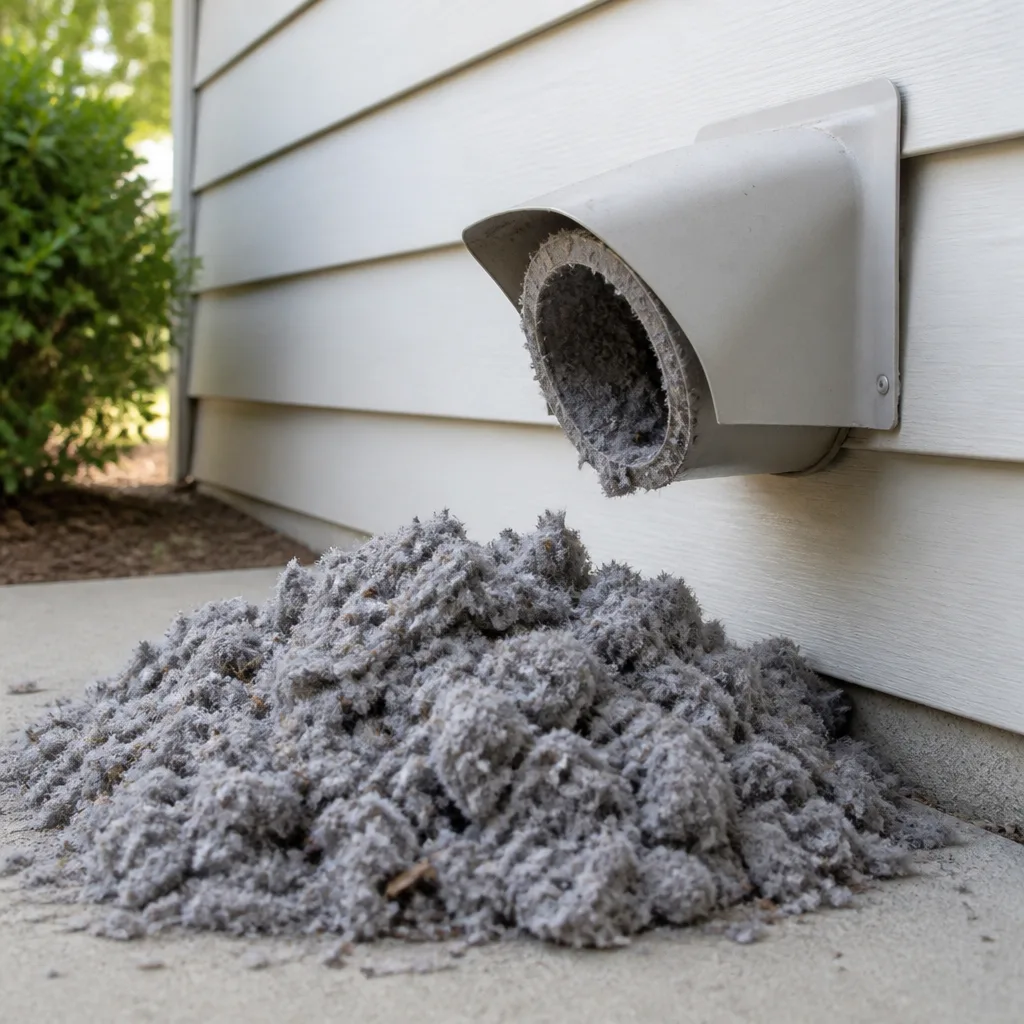 Dryer vent cleaning
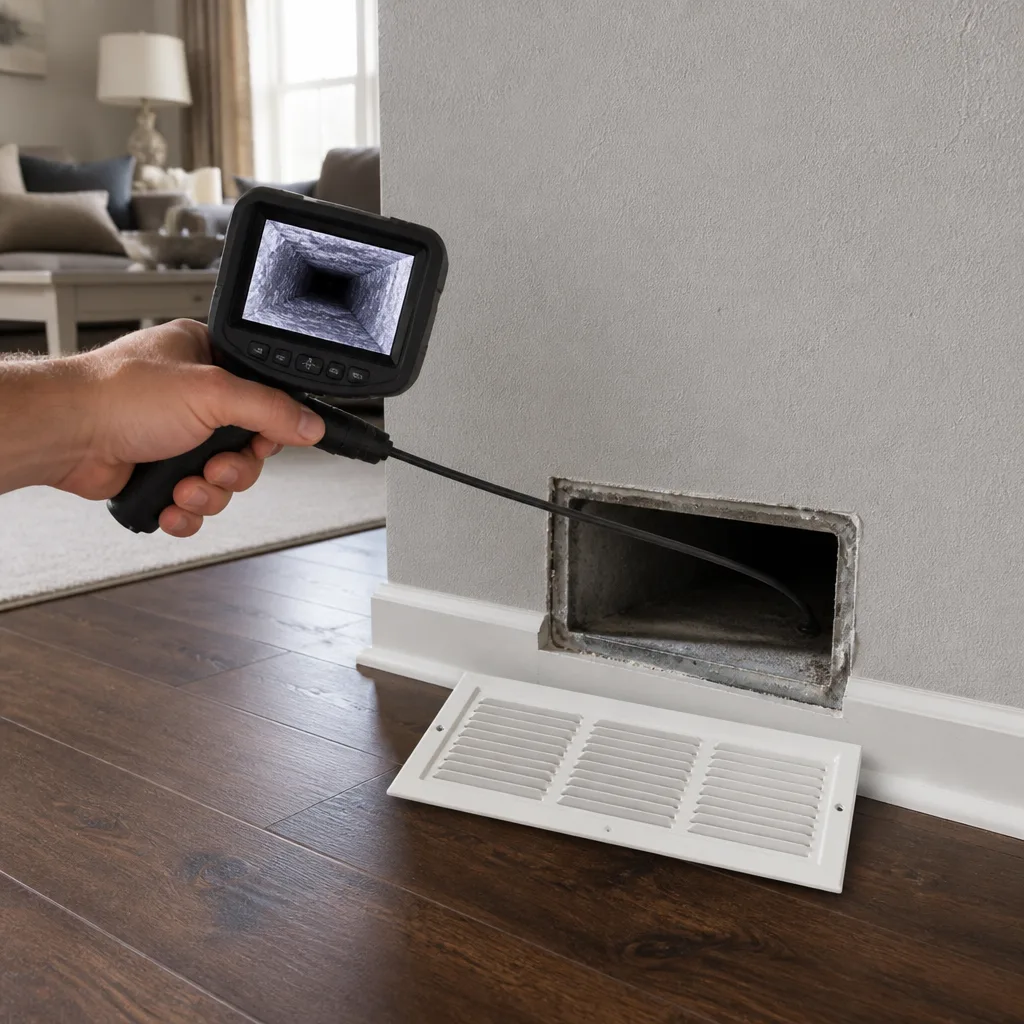 Camera inspection
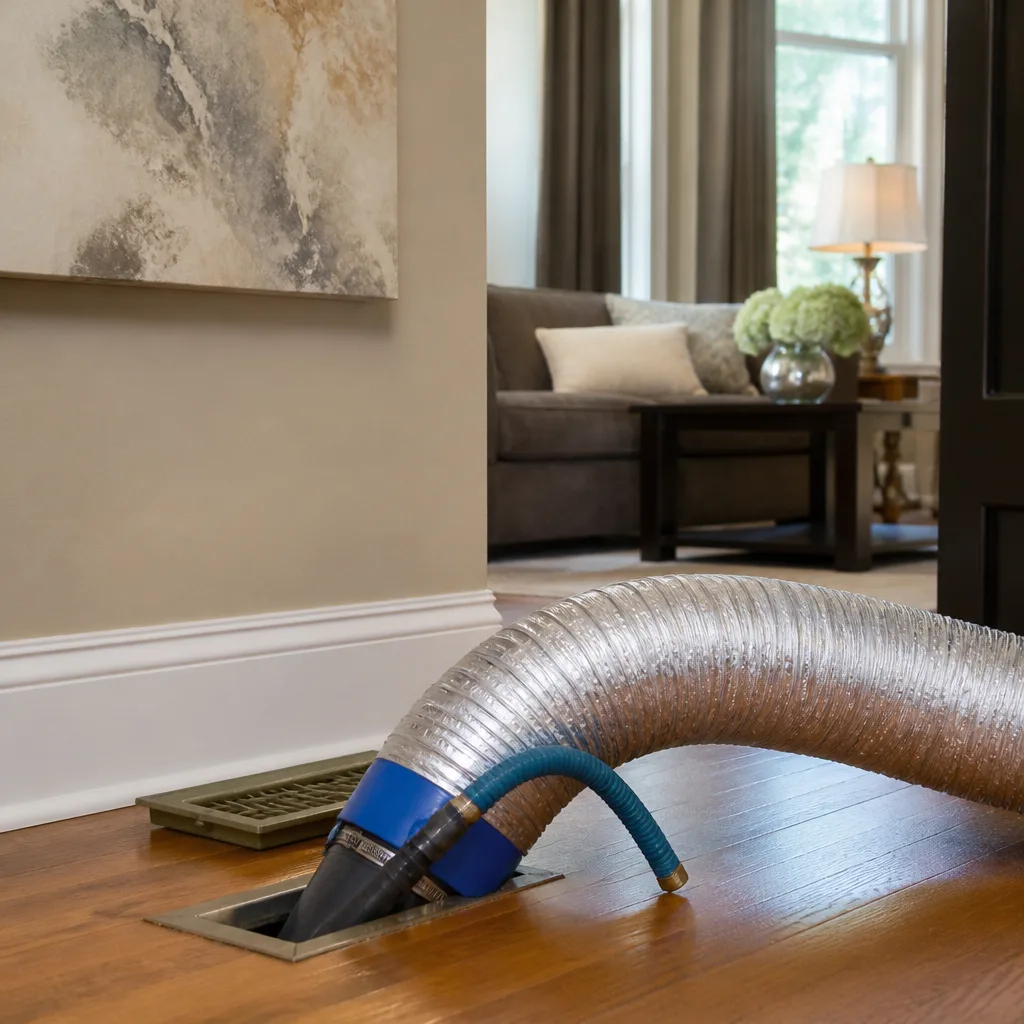 Sanitizing & deodorizing
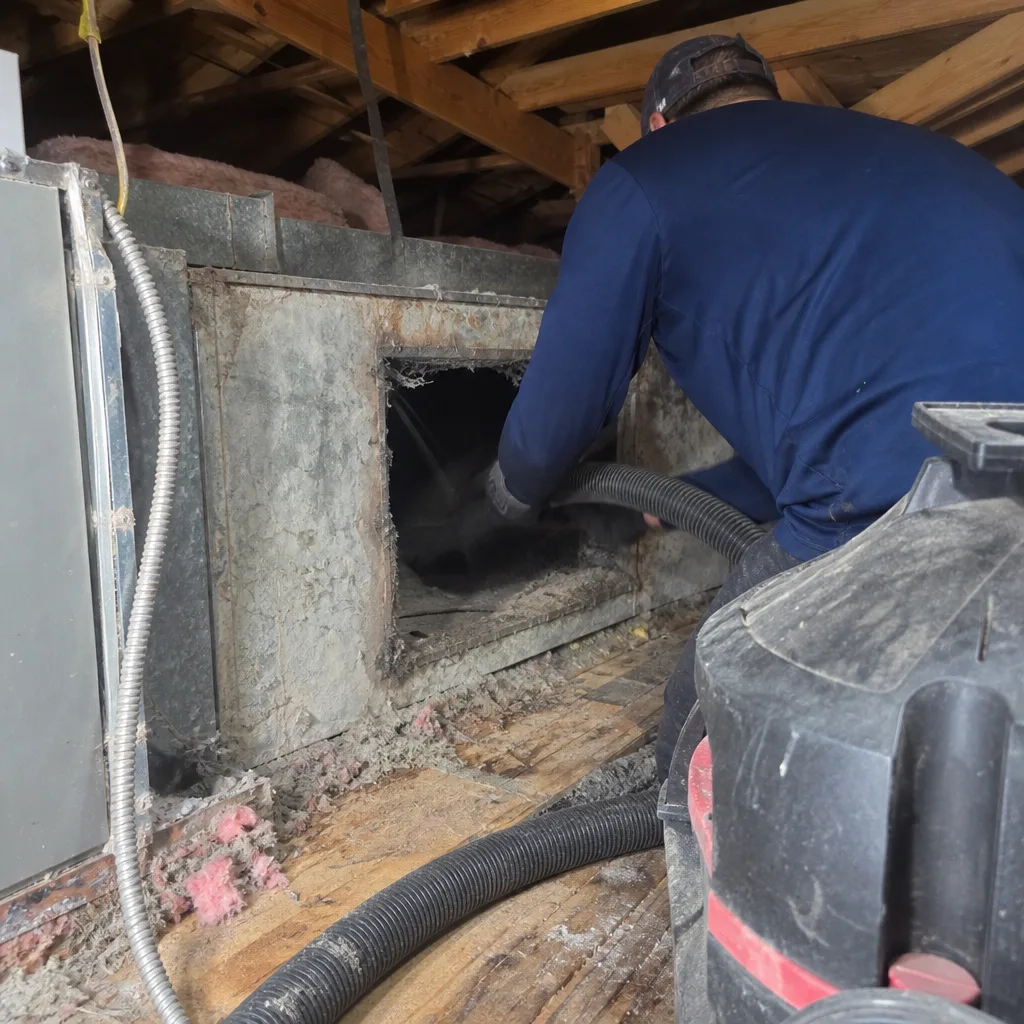
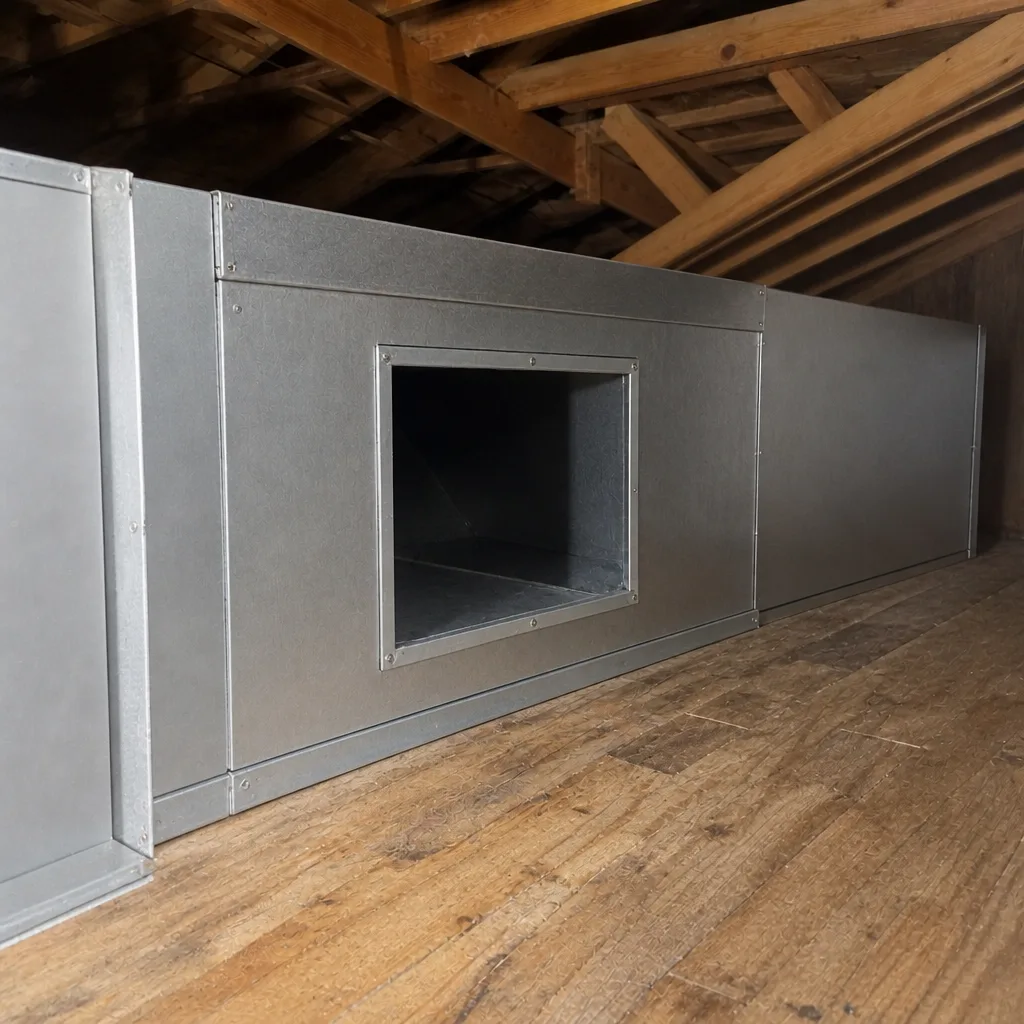
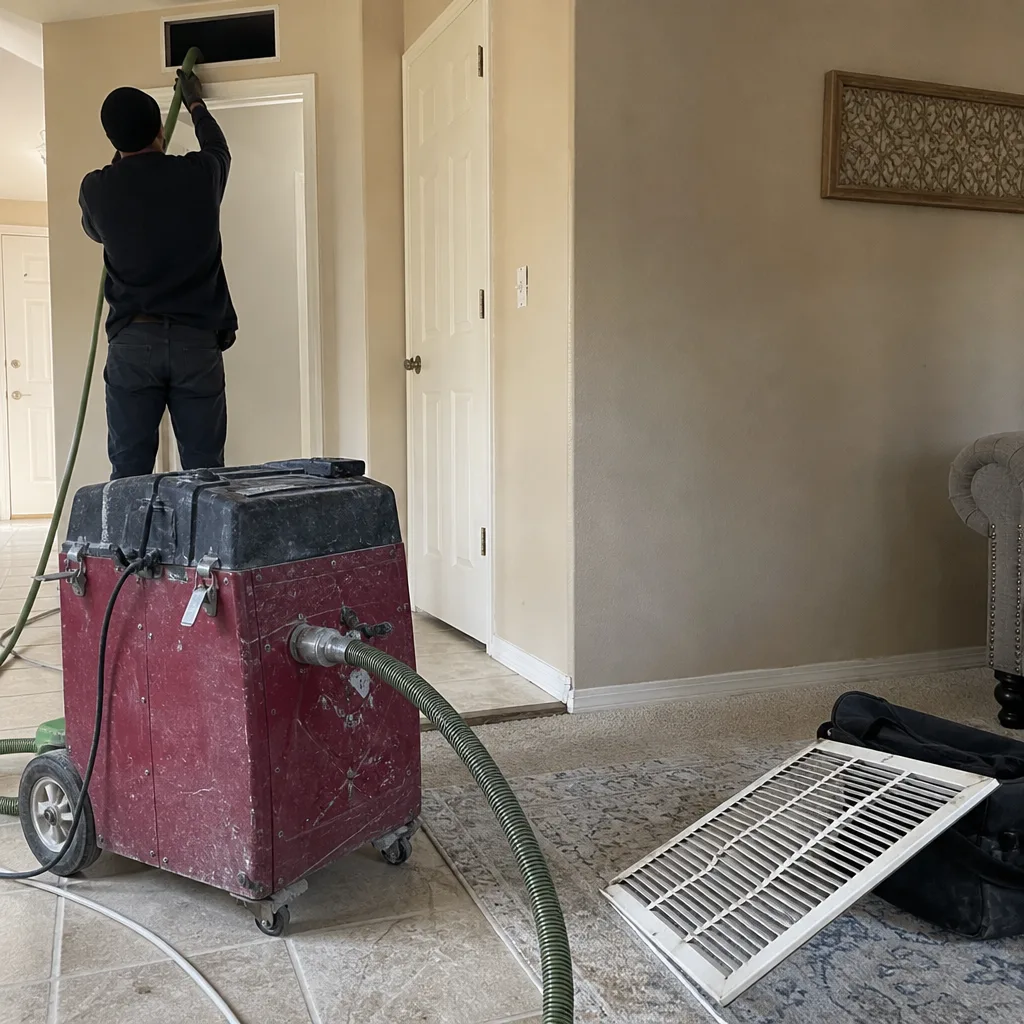
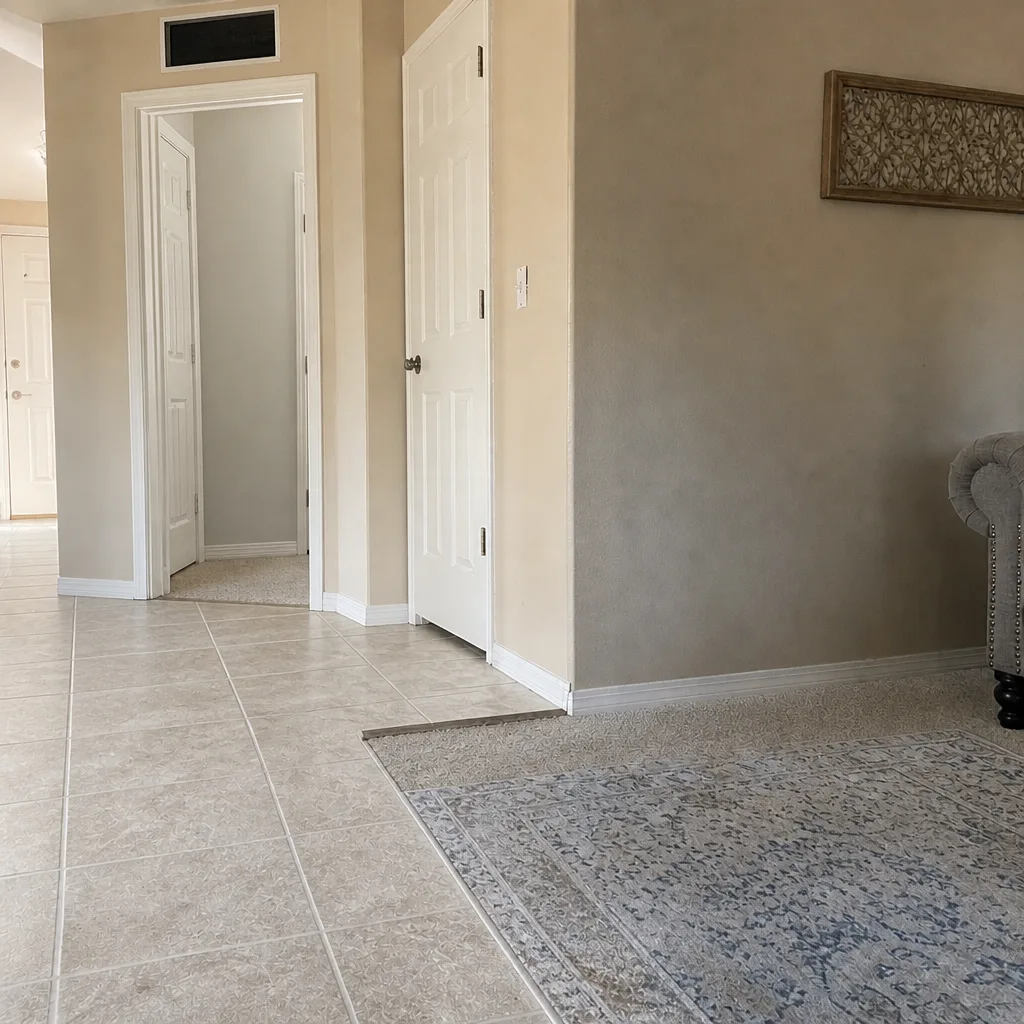
Whole-system duct and dryer vent check with before-and-after photos - you see exactly what came out of your vents
That "$99 whole-house special" is a bait ad - the real number appears once they are in your hallway, or the "clean" is a shop-vac at the register. We photograph the inside of your ducts before and after instead.
Air Duct Cleaning Maintenance Checklist for Lubbock Homeowners
Most duct maintenance advice is written as if every house sits in the same mild, windless place. Lubbock doesn’t work that way. Between the caliche dust that rides in on a spring wind event, the cotton harvest that fills the air from late summer into fall, and the May switch from heating to cooling that pushes a season’s worth of settled debris back into the airstream, a Lubbock duct system collects particulate on a schedule no annual reminder calendar reflects. A single haboob can load a return plenum in 48 hours with more material than six months of ordinary household living. So the checklist that follows isn’t a “clean once a year” note. It’s a set of triggers tied to what actually happens in Lubbock: storm events, renovation dust, the spring HVAC switchover, and how your house was built. You’ll learn how to read your own registers, log your filters, and know the difference between a filter change, a proper cleaning, and a repair. Lubbock homes have specific patterns, and this guide is built around them.
Quick Answer
A practical air duct maintenance checklist for Lubbock homeowners is event-driven, not calendar-driven: inspect registers and change filters after every dust storm, after any renovation or drywall work, at the May heating-to-cooling switchover, and roughly once a season in between. A full duct cleaning is due when you see visible debris accumulation, persistent dust on supply registers within days of cleaning, rising filter load, or airflow that has noticeably weakened. For homes in older Lubbock neighborhoods with aging flex duct, inspection matters more often than cleaning.
Styles & brands we work with
- Whole-home duct cleaning
- Dryer vent cleaning
- Camera inspection
- Sanitizing & deodorizing
Table of Contents
- Event-Triggered Checkpoints: Dust Storms, Renovation, and the May Switchover
- How to Do a Credible Visual Register Check
- Filter Log Methodology: Reading Static Pressure Drop
- Lubbock’s Housing Stock: 1970s – 1990s Flex Duct vs. Newer Sheet Metal
- Reading Debris Color and Texture: What It Actually Tells You
- Filter Change vs. Cleaning vs. Scope Camera Inspection vs. Repair
- A Year of Duct Maintenance in Lubbock, Season by Season
- When to Call a Professional
Event-Triggered Checkpoints: Dust Storms, Renovation, and the May Switchover
The most useful shift a homeowner can make is to stop thinking about duct maintenance as an annual chore and start treating it as a response to events. In Lubbock, three triggers come up again and again, and each one calls for a different response.
After a dust storm or high-wind event
West Texas gets serious blowing dust, and a house is not sealed the way most people assume. Gaps around exterior doors, attic hatch seals, and the return path all pull fine particulate into the system when pressure differentials shift. What we’ve seen in our work is that a storm event doesn’t just coat surfaces; it loads the filter and the return-side ducting faster than normal living does. Within a couple of days of a prominent dust event in Lubbock, check the filter, pull and inspect a supply register or two with a flashlight, and note whether dust is falling out immediately.
After a home renovation or drywall job
Drywall dust is finer and more aggressive than ordinary household dust, and a renovation almost always produces it in volume. Even with plastic sheeting up, some finds its way into the return system. After any remodel, especially ceiling or wall work, expect a filter replacement within the first week and a visual register check. If the renovation was extensive or ran for weeks, a professional cleaning is often the right call once the dust has settled. It’s a common oversight: the project wraps, the plastic comes down, and nobody thinks about what went into the ducts.
At the May switchover
When the heating season ends and the cooling season begins here, the airflow direction and the load on the system change. Debris that collected in the return and supply plenum during heating season starts moving through the distribution side. The May switchover is an ideal inspection point: change the filter, run the system, and listen. A whistle at a register, weak flow at a distant room, or a musty note in the first few minutes of running are all worth noting. Doing that check once a year at the same time makes it easy to compare year over year. For most Lubbock homes, this is the natural anchor point for the whole checklist.
How to Do a Credible Visual Register Check
You don’t need specialized gear to get useful information from your own registers. A flashlight and your phone camera, used consistently, will tell you more than most people realize. The trick is doing the same check the same way each time so you can compare. A one-off look tells you almost nothing; a repeatable one tells you a lot.
- Turn the system off at the thermostat before you inspect. You don’t want the fan moving debris around while you’re trying to look at it.
- Remove a supply register cover (most are held by two screws or simply lift out). Set the screws somewhere you’ll find them.
- Shine the flashlight into the duct boot and as far down the branch as you can see. Photograph it straight-on, not at an angle.
- Do the same at one or two return grilles. The return side is where heavier loading tends to show first.
- Note what you see: is it a uniform light film, a patch of settled material, or actual buildup on the duct wall? Where is it?
- Look for anything that tumbled in: dust bunnies, dried bits of insulation, or material that shouldn’t be there.
- Repeat from the same register at the same angle each time you check. Comparing photos over months is where the real signal is.
What you’re looking for across checks is a trend. A light uniform film that reappears within a few weeks of cleaning is different from a healthy surface with a bit of settled dust. This is also where fine dust versus a fibrous texture gets interesting; the next section on debris color and texture covers that in detail. If you’d rather have a trained eye read the registers, we do that as part of our air duct cleaning scope in Lubbock, and the walk-through with your own photos is a good place to start the conversation.
Filter Log Methodology: Reading Static Pressure Drop
A filter log is the single most underused diagnostic tool a homeowner has. You’re not tracking how often you change the filter; you’re tracking how quickly the filter loads, because that rate tells you something your senses can’t. When the filter loads faster than it used to, something upstream has changed: more debris entering the system, a bypass around the filter, or a restriction in the ductwork downstream.
How to keep a usable log
- Date and note every filter change in a phone note or a notepad on the air handler. Include MERV rating and filter size.
- Note the condition in plain words: light gray, heavily loaded, dark patches on one side, clogged on a specific half. Where a filter loads unevenly is diagnostic in itself.
- Cover the filter with a short strip of masking tape and watch for the tape to bow outward as the fan pulls. That’s a rough visual for static pressure building across the filter. A filter that is bowing sooner than it used to is loading faster.
- Listen for the fan tone change between a fresh filter and a loaded one. Many homeowners can hear the difference without measuring anything.
- Log it every time and once a season look back at the trend. Two filters in six weeks in a home that used to run a filter for three months is a signal worth acting on.
Static pressure drop is what an HVAC tech measures with a manometer, and that number tells you exactly how much resistance the filter is putting on the blower. Your log is a proxy for that, and it’s good enough to flag change. When the log shows loading much faster than usual, the next step is a real measurement from someone with a manometer and a scope, which we do as part of our inspections. Contractor-grade sensing and a homeowner log complement each other; the log tells a tech where to look.
Lubbock’s Housing Stock: 1970s – 1990s Flex Duct vs. Newer Sheet Metal
Lubbock has a wide spread of housing vintages, and duct maintenance planning should follow the house, not the calendar. A home built in the 1970s through the 1990s and a newer build with sheet metal trunk lines have different failure patterns, and a checklist that fits one can miss the other entirely.
1970s – 1990s homes: flex duct and its wear points
Flex duct runs are common in homes from this era, and they’re generally reliable but they age. The inner liner can sag or tear over time, and a small tear becomes a bypass that dumps dust and unfiltered air into a wall cavity or an unconditioned space. The checklist for this stock:
- Look at the outer jacket at every visible run. Any tear, sag, or disconnected section is a loss of efficiency and a contamination source.
- Check the boots where the flex connects to the register. Tape and sealant dry out over decades, and the connection is a common loose point.
- Note any run that droops across a span. Flex should be supported and taut; a sagging run traps dust.
- Inspect the return plenum where it meets the air handler. This is where dust accumulates on this cohort of homes.
Air duct repair is a separate service from cleaning for exactly this reason. Cleaning out a system that has a torn flex run just releases material that will return. We address the structural cause first. That’s why “we clean it, and we can fix it” is part of how we operate in Lubbock.
Newer construction: sheet metal trunk lines
Newer Lubbock homes with sheet metal trunk lines tend to have cleaner airflow paths but different concerns: the connection between the trunk and the register boots, sealant condition at joints, and whether the filter cabinet has a proper seal. Static pressure behavior is also easier to measure on sheet metal because the duct walls are rigid and resistant to collapse. These homes are typically less prone to dust accumulation per year, which means an event-driven cleaning threshold matters more than an annual one.
Reading Debris Color and Texture: What It Actually Tells You
Not all dust is the same, and what shows up on a register tells you something about where it came from and whether cleaning will help. Our technicians have up to 9 years of experience with these systems, and the material itself is often the first clue before any equipment is even turned on.
- Gray, fine mineral dust is the dominant Lubbock signature. It’s caliche and soil material carried in on wind, and it’s often uniform. A system that keeps loading with fine gray dust is telling you about the source: outdoor infiltration, filter condition, and return sealing.
- Dark organic matter, especially with a musty smell, points to moisture somewhere in the system, and moisture is the thing to take seriously. It could be condensation, a disconnected run in a humid space, or an HVAC issue. This is a case where a professional scope inspection is warranted rather than another round of cleaning.
- Fibrous material that looks like insulation strands suggests liner or jacket material is detaching. Flex inner liner that has begun to break down is common in older runs and can shed fibers into the airstream. That’s a repair case, not a cleaning case.
- Uniform light dust on every surface is normal and expected, especially in Lubbock. It’s a maintenance item, not an emergency.
- Patchy heavy loading in one area points to a local issue: a specific branch, a disconnected boot, or a leak downstream of the filter.
If the material has a sour note to it, or you see anything that looks like it’s growing (not settled dust but something with a fuzzy, spreading character), our role is to inspect and report, not to speculate. We don’t diagnose or handle mold; if a scope inspection turns up evidence of growth, the next step is a conversation with an indoor air or remediation specialist, and we can point you in the right direction.
Filter Change vs. Cleaning vs. Scope Camera Inspection vs. Repair
One of the practical problems with duct maintenance is that “get the ducts cleaned” gets thrown at every symptom. In reality there are four levels of response, and matching the response to the finding is where the value is. Here’s how we think about each.
Level 1: Filter change
If your visual register check shows nothing beyond a light film, and your filter log is steady, and airflow is normal, a filter change is the whole job. This is the right answer more often than people assume. It’s also the right first move after any minor dust event. If you want a filter that catches more of Lubbock’s fine particulate without loading so fast the system is starved, the balance between MERV rating and your specific blower is something to sort out honestly.
Level 2: Full duct cleaning
When a visual check shows real accumulation on the duct walls, when dust returns to registers within days of cleaning, when the filter log has clearly worsened and there’s no obvious external cause, or when the system has never been cleaned and it’s been many years, a full cleaning is warranted. This is where equipment matters. We use the Rotobrush rotary brush system for the cleaning work itself and Nikro HEPA-filtered vacuum equipment to contain the material. When conditions are heavier, we bring Abatement Technologies negative-air and remediation tools to keep containment under control. The difference between a shop vac and a HEPA-filtered negative-air setup is the difference between loosening debris in the house and removing it from the house.
Level 3: Scope camera inspection
A scope inspection is a camera run inside the duct to see what the flashlight can’t. It’s the right call when there’s an unexplained problem: a persistent odor, a branch that never seems to deliver airflow, a visual finding you can’t explain, or a system that has been cleaned but keeps acting like it’s restricted. It’s not needed on every job, and we don’t pretend it is. It’s used when the question is specific enough that seeing inside is what answers it.
Level 4: Air duct repair
If the inspection or the register check turns up a torn flex run, a disconnected boot, a failed seal at the trunk, or a liner shedding into the airstream, the answer is a repair first, then a cleaning. This is the finding that most cleaning-only operations leave behind, because it’s not what their kit is set up for. Repair is a standalone service from us, which is what makes a full-scope approach possible. In Lubbock, where aging flex is common, this scenario comes up regularly.
A Year of Duct Maintenance in Lubbock, Season by Season
Here’s how the checklist maps to the year in Lubbock. This is a framework, not a fixed calendar. Dust event frequency varies, and a home with pets or a smoker runs a faster cycle than one without. Use it to plan, and let your filter log adjust the interval.
- Late winter (before the switchover): Change the filter. Do a flashlight and camera check at two or three registers. Note the condition in the log. This is a low-effort baseline for the year.
- May (switchover): Change the filter and run the system. Listen for new sounds at registers and pay attention to airflow in the far rooms. This is the high-value inspection point of the year. Do your visual check and compare it to the winter photos.
- After any dust storm or high-wind event: Pull the filter. If visibly loaded, change it. Do a quick register check. Log the event with a note.
- After any renovation or drywall work: Change the filter within the first week. Visual check at affected registers. If the renovation was extensive, schedule a professional cleaning once the dust clears.
- Late summer into fall (cotton harvest): In Lubbock, harvest season fills the air with fine fibrous material that finds its way into the return path. Expect faster filter loading and log it. A visual check now can catch a loading trend before it becomes an airflow complaint.
- Annually or as findings warrant: Review the filter log and the register photos across all four seasons. If the trend is trending up, or if it’s been a long time since a full cleaning, call for a scope inspection and estimate.
Two things to watch for across the year: the register photos from the same point and angle, and the filter log trend. Those two together will tell you more about your system than any single symptom. If you want a proper baseline to set the year against, our Duct Cleaning Lubbock walk-through with a scope camera and filter check is a sensible starting point, and we’ll tell you honestly whether a full cleaning is even warranted.
The Checklist Item Most Homeowners Skip: The Dryer Vent
Air duct maintenance gets all the attention, but the dryer vent is the ductwork with an actual fire record. Lint is highly combustible, and a dryer vent that has not been cleared accumulates it inside the run, restriction by restriction, until airflow drops and the dryer runs hotter. It’s a leading cause of residential house fires and one of the few maintenance items where the checklist is about safety first and efficiency second. In Lubbock, where dryers run hard through summer, the vent cycle comes around quickly.
What to check at the vent:
- Lint buildup around the outside termination after each load, not every few months.
- Dryer cycle time creeping up. A load that used to finish in one cycle and now needs two is a restriction signal.
- Heat and humidity in the laundry room that seem out of proportion to the load size.
- The exterior flap: does it open freely when the dryer runs? A flap that barely moves or stays stuck is a blockage sign.
- The full run, annually or more often if the run is long or has multiple bends. This is a job where a proper rotary brush system matters; a vacuum alone doesn’t clear adhered lint from the full length of the run.
A proper dryer vent cleaning service uses the same rotary brush equipment we run in duct work, because the problem is the same: adhered material on the duct wall that a shop vac can’t dislodge. On a restricted vent, clearing it is a fire-safety measure as much as an efficiency one. In a Lubbock home where the dryer feels hot to the touch at the end of a load, that’s the cue to schedule it.
Common Mistakes to Avoid
- Cleaning on a fixed annual date and ignoring events. A schedule that skips the post-storm and post-renovation triggers misses the two moments when Lubbock ducts actually load the most. The right frequency here is set by events, and a static reminder on the calendar won’t catch them.
- Choosing a filter by MERV rating alone. A filter that’s too restrictive starves the blower and can increase static pressure to the point where you lose more efficiency than you gain in filtration. The right filter is one that matches your blower, not the highest number on the box.
- Judging the system by the registers nearest the thermostat. The whole system needs a check, and in Lubbock homes built through the 1970s and 1990s, problems tend to hide in the longest runs and the return plenum, not the closest register.
- Assuming a low price means the same job. The shop-vac and blow-and-go approach is much cheaper because it doesn’t contain or remove the material; it just moves it. If you’re comparing bids, ask what equipment is used and whether the job includes the return side and the air handler approach.
- Skipping the dryer vent because the dryer still works. A dryer will keep running for a long time after the vent is restricted, and the fire risk climbs the whole time. Treat it as a separate checklist item with its own inspection cycle.
- Cleaning around a known flex duct tear. Cleaning a system with a torn or disconnected run just releases dust that returns, and can push debris into a wall cavity. Fix the structural issue first.
- Never looking inside again after a cleaning. The register photo comparison at six and twelve months is how you know whether the cleaning held. Without it, you’re taking the result on trust.
See the difference
 Before
 After
 Before
 After
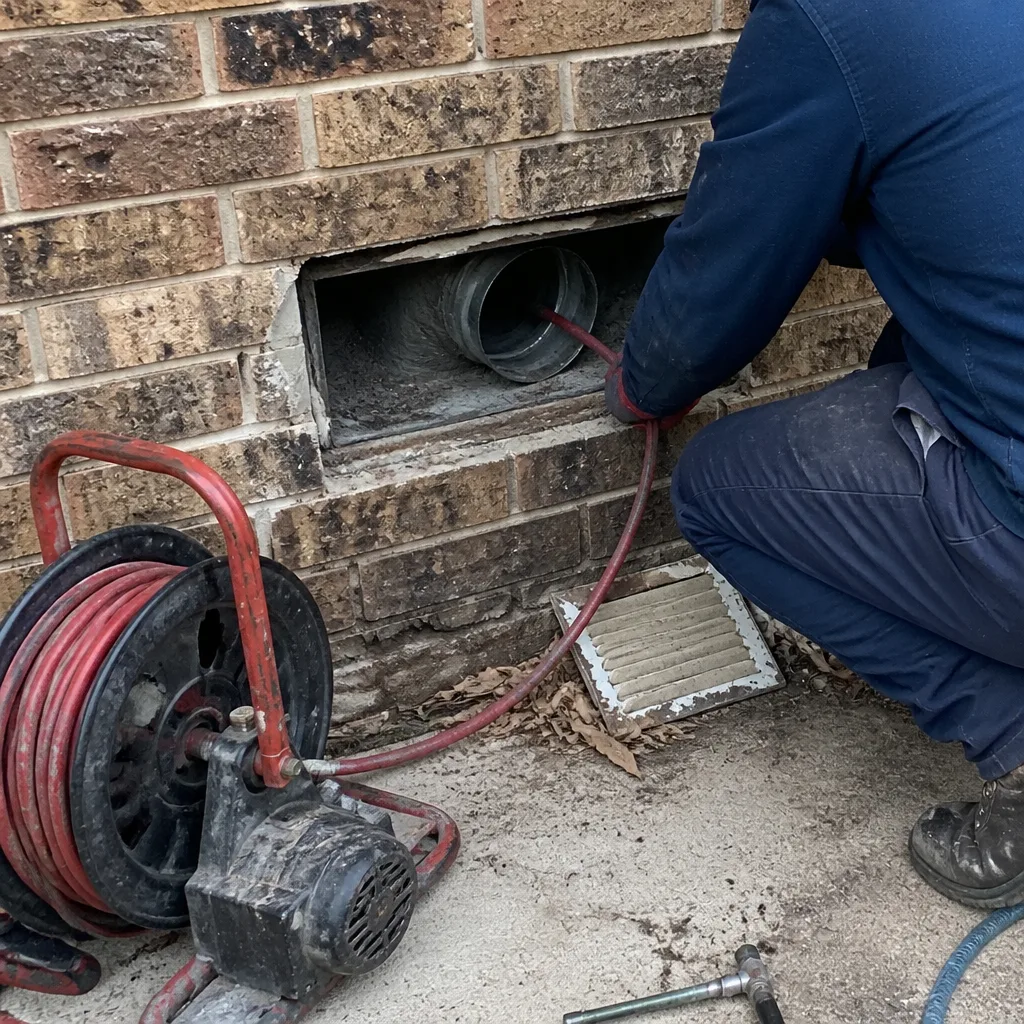 Before
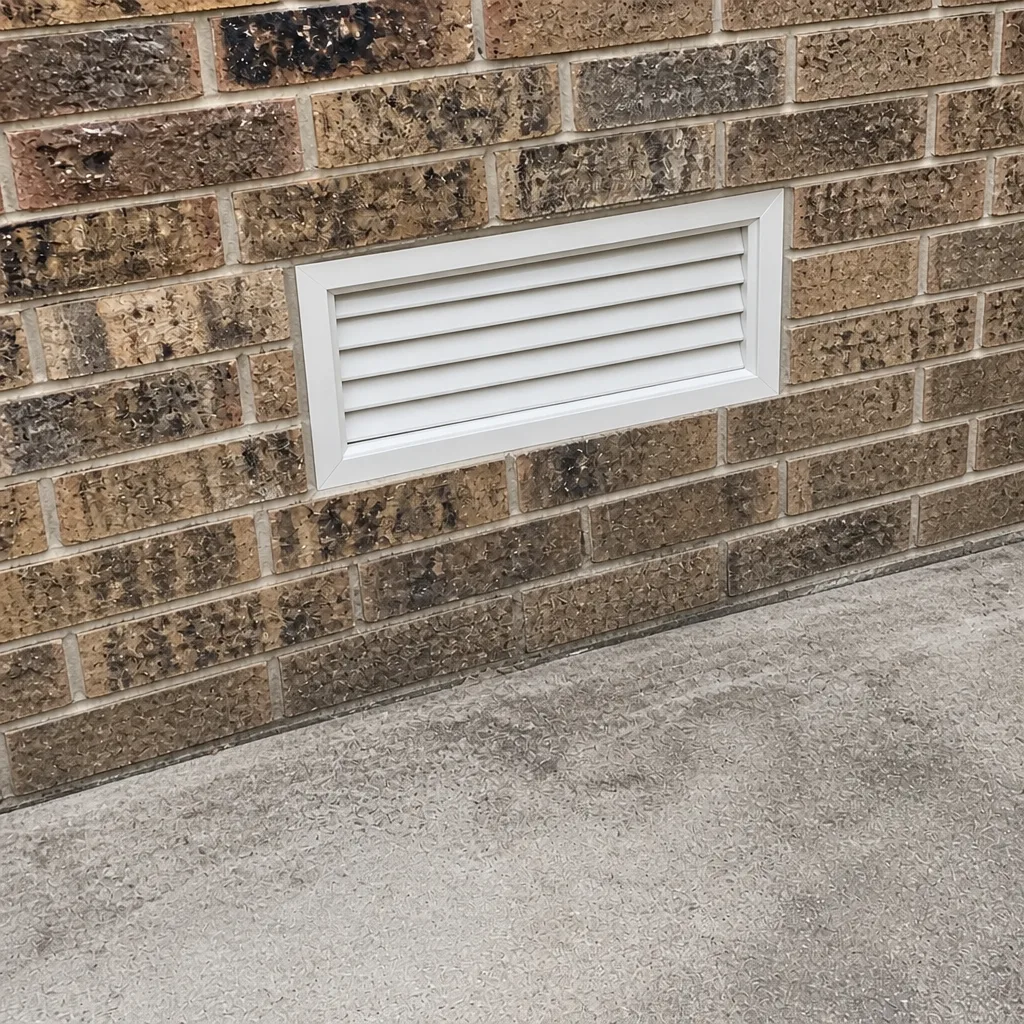 After
When to Call a Professional
Call when a visual check shows real accumulation on the duct walls, when dust returns to supply registers within days of a cleaning, when your filter log shows loading much faster than before, when there’s a persistent odor, or when you hear or feel a specific branch underperforming. Also call if the system has never been cleaned and it’s been many years, or if you have a Lubbock-area home with aging flex duct and you haven’t looked inside it recently. If a scope inspection reveals a structural issue, a repair is the right first step. Duct Cleaning Lubbock offers free estimates in Lubbock; call (833) 958-4715 to set one up. We answer 24/7, with fast dispatch from 7am to 7pm, Sunday through Friday.
Frequently Asked Questions
Most Lubbock homes benefit from a full cleaning every two to five years, but the interval should follow your event triggers rather than a fixed calendar. If you notice dust returning to registers within a few weeks, a filter log that’s loading faster than it used to, or a persistent odor, don’t wait for the year. A visual register check and a scope inspection will tell you whether it’s time. Call (833) 958-4715 for an exact quote; estimates are free.
Because a West Texas dust event deposits fine caliche material inside the system far faster than ordinary household activity does. A single haboob can load a return plenum with more material in 48 hours than six months of normal use. Changing the filter and doing a register check right after a storm catches the deposit before it’s redistributed through the whole system. Call (833) 958-4715 for an exact quote; estimates are free.
You can manage the checklist yourself, and the visual register check, filter log, and dryer vent monitoring are all homeowner-appropriate tasks. What you can’t replicate with consumer tools is the containment. A shop vac loosens material without HEPA-filtration or negative-air control, and that material ends up distributed in the living space. For the cleaning step itself, the Rotobrush and Nikro equipment we use is what actually removes the debris from the house. Call (833) 958-4715 for an exact quote; estimates are free.
Cleaning removes the accumulated debris from a structurally sound system. Repair fixes the structural cause that’s producing the debris or the air loss, such as a torn flex run, a disconnected boot, a failed seal, or a liner shedding into the airstream. In Lubbock, the older housing stock makes repairs of this kind common, which is why we offer air duct repair as a separate service and clean after the repair, not instead of it. Call (833) 958-4715 for an exact quote; estimates are free.
It can help by removing the accumulation of dust and material from the system, which reduces what gets redistributed through the air. Whether it helps noticeably depends on the source of the trigger: outdoor particulate from Lubbock’s wind and cotton season, pet dander, or something specific to the home. A proper cleaning plus a matched filter and a tight return path is the combination that gives the best result. Call (833) 958-4715 for an exact quote; estimates are free.
Ask for before-and-after photos of your own ducts, not a stock photo. We use a scope camera to document the condition inside the system before and after the cleaning, and that’s the record you can keep in the file. Whichever company you hire, ask for those photos of your system specifically, and know the exact scope (return side, supply branches, air handler approach) agreed before the work starts. Call (833) 958-4715 for an exact quote; estimates are free.
The Bottom Line
The single most useful takeaway from this guide is that duct maintenance in Lubbock is event-driven. A dust storm, a renovation, the May switchover, and the cotton harvest are the triggers your checklist should respond to. A filter log and a repeatable register check, done the same way each time, are the two tools that will tell you more than any annual reminder. Keep the debris types in mind when you read the registers; fine gray dust is a maintenance point, dark material with an odor warrants a scope inspection, and fibrous material signals a repair. Match the response to the finding: a filter change when the checklist is clean, a professional cleaning when it isn’t, and a repair when the structural cause shows. And treat the dryer vent as its own safety item, not a footnote.
If the checklist points to a cleaning, a repair, or a dryer vent service in Lubbock, the next step is a free estimate. Call (833) 958-4715. We answer 24/7. Fast dispatch from 7am to 7pm, Sunday through Friday. We’ll walk the system with a scope camera, tell you honestly whether a full cleaning is warranted, and give you one flat price per system agreed before work starts, with before-and-after photos of your own ducts.
Written by the team at Duct Cleaning Lubbock.