
Last updated November 15, 2026
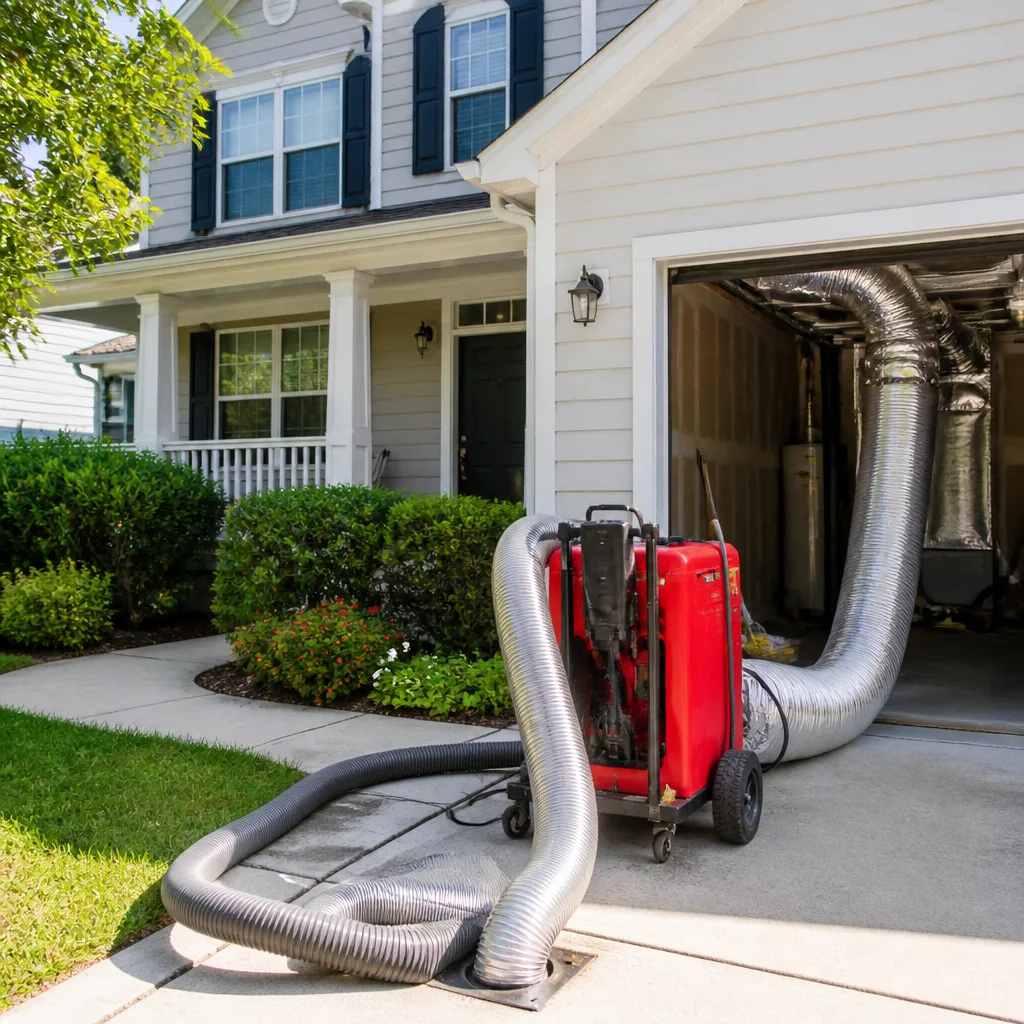 Whole-home duct cleaning
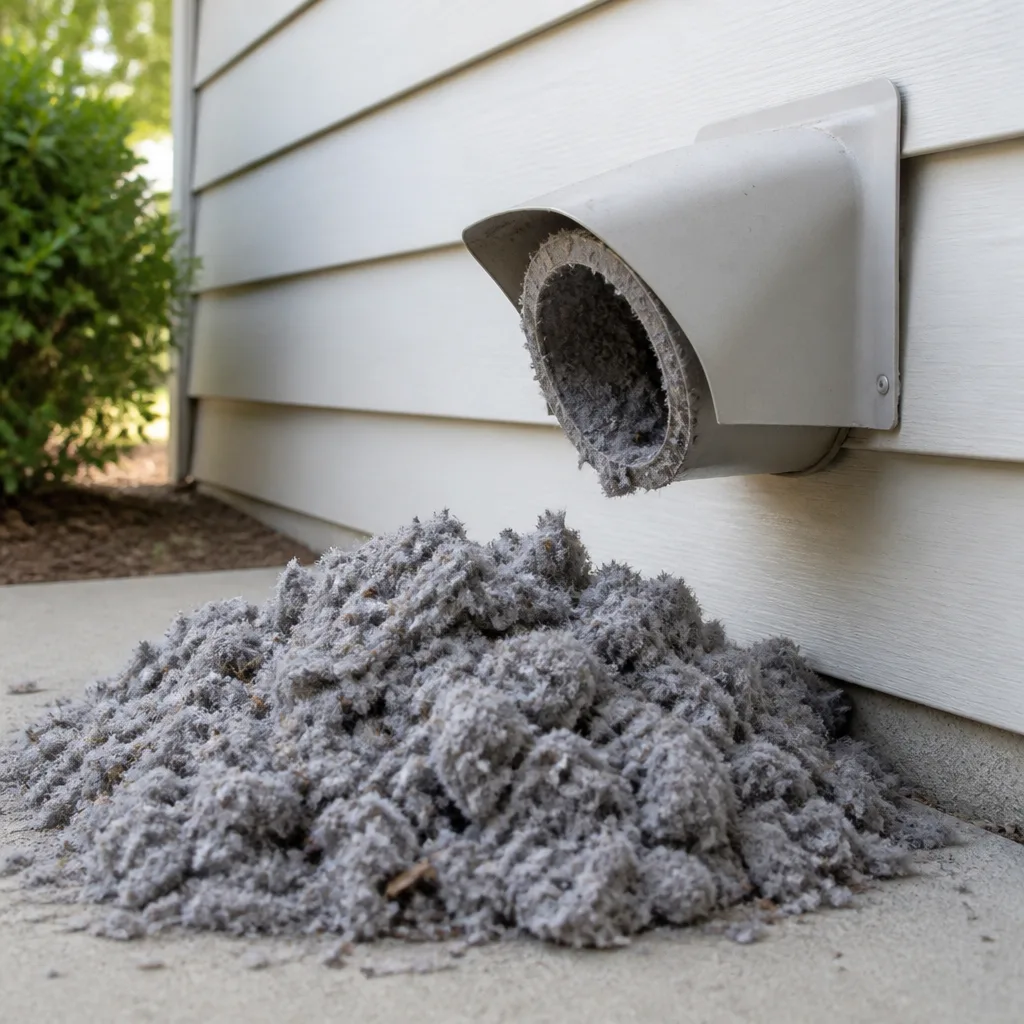 Dryer vent cleaning
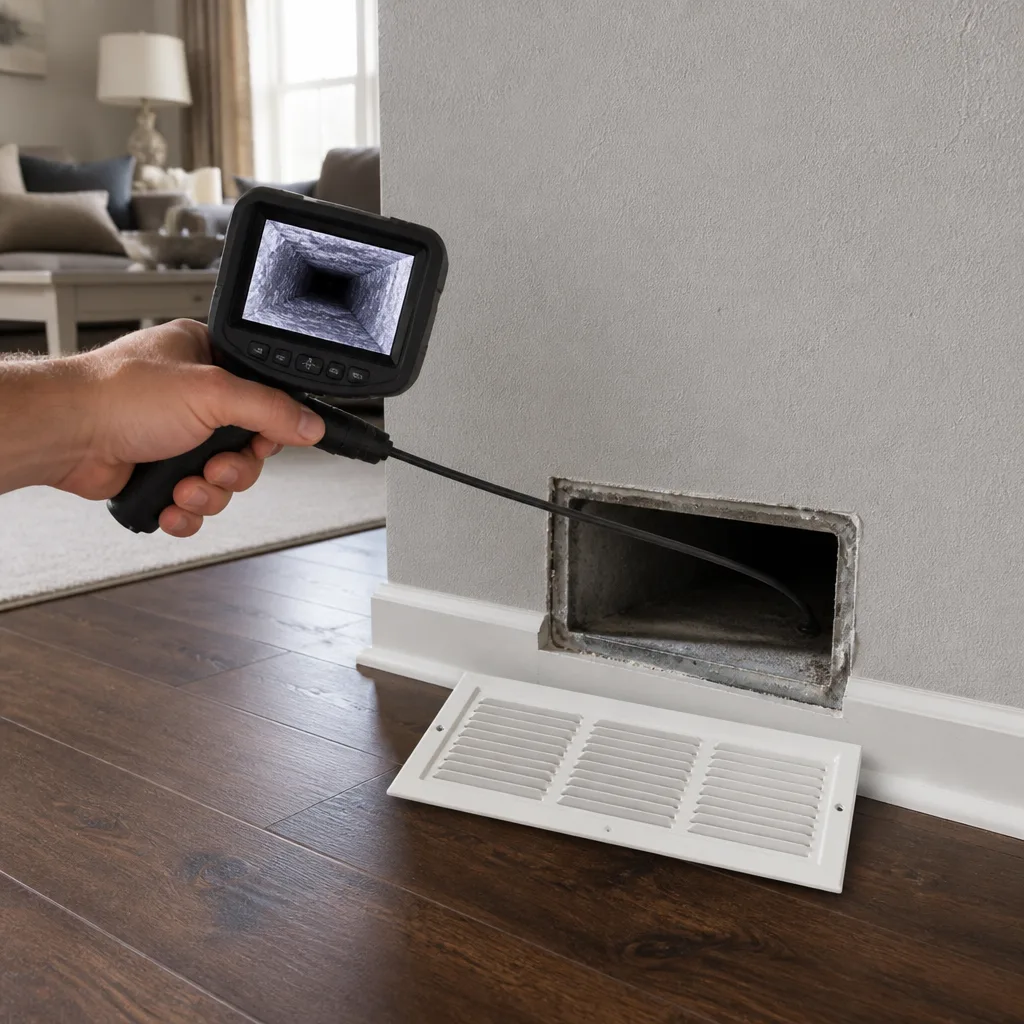 Camera inspection
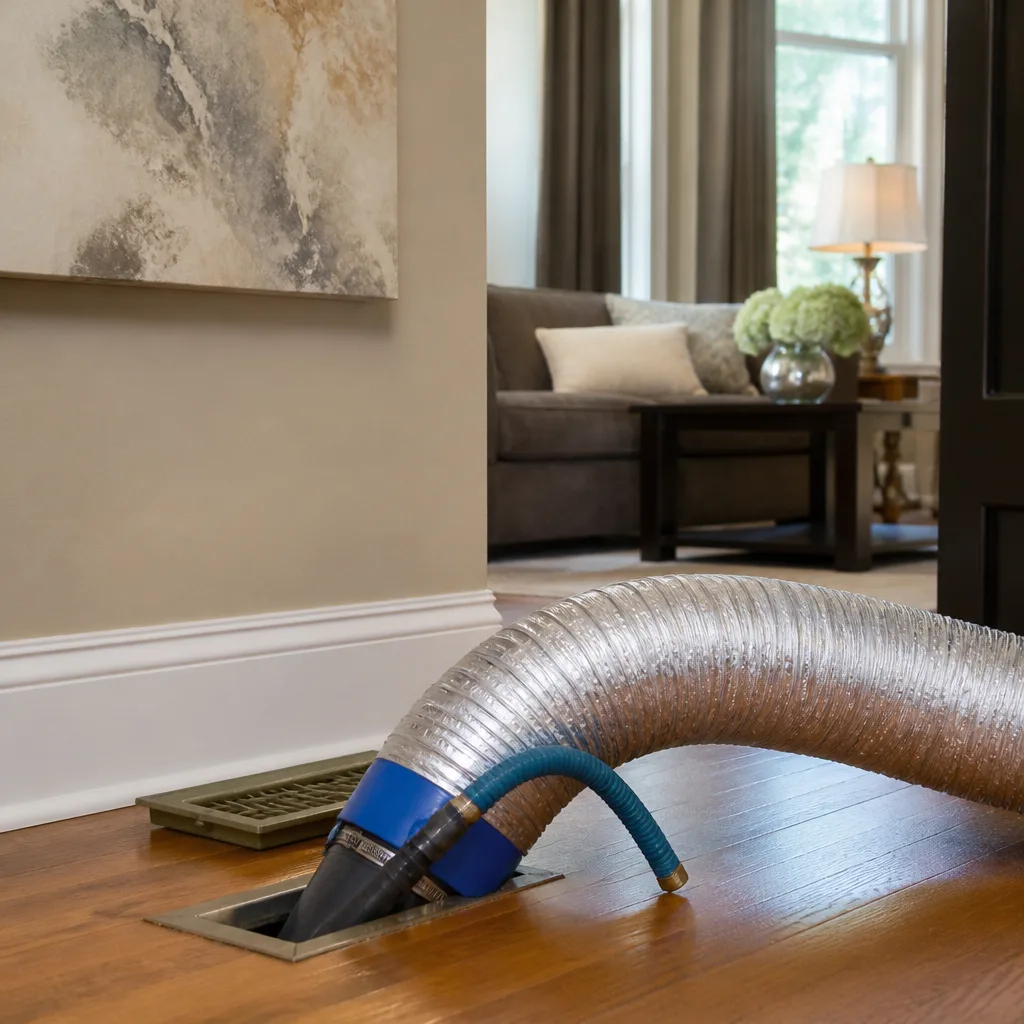 Sanitizing & deodorizing
Whole-system duct and dryer vent check with before-and-after photos - you see exactly what came out of your vents
That "$99 whole-house special" is a bait ad - the real number appears once they are in your hallway, or the "clean" is a shop-vac at the register. We photograph the inside of your ducts before and after instead.
Air Duct Cleaning Warning Signs: A Lubbock Homeowner’s Reference Guide
By the time you can see dust curling up from a supply register, the problem inside your duct system has usually been building for months. Visible dust is the late symptom, not the early one. The signs that actually matter are quieter: a filter that caves in sooner than it used to, a bedroom that runs a few degrees off from the rest of the house, an odor you can’t quite place, or a fine grit that keeps settling on the same shelf after every windy week in Lubbock. This guide walks through the pre-failure indicators a careful homeowner can actually detect, explains what each one points to, and shows you when to stop watching and start calling.
Quick Answer
The most reliable early warning signs of a duct problem in Lubbock are a filter that loads up or collapses faster than normal, room-to-room temperature swings above 3°F, musty or acrid odors from registers, visible grit on return grilles after dust storms, and rising energy use without a change in habits. Visible blowing dust is a late-stage sign, not an early one. If any two or three of these show up together, it’s worth getting the system inspected before the problem moves from restriction to contamination.
Styles & brands we work with
- Whole-home duct cleaning
- Dryer vent cleaning
- Camera inspection
- Sanitizing & deodorizing
Table of Contents
- The Early Warning Signs Most Homeowners Miss
- Static Pressure Creep: The Indicator That Tells You First
- Room-to-Room Temperature Swings Above 3°F
- What Your Duct Odors Are Telling You
- The Post-Storm Inspection Checklist Most Lubbock Homeowners Skip
- Dirty Filter vs. Filter Bypass: Reading the Debris Pattern
- When the Problem Is Structural, Not Just Dirt
- When to Call a Professional
The Early Warning Signs Most Homeowners Miss
Most “warning signs” lists recycle the same obvious symptoms: you see dust, you smell something, you call someone. But a duct system doesn’t degrade overnight. It loses performance in layers, and the useful signals appear well before the obvious ones. If you know what you’re looking at, you can catch restriction and contamination while the fix is still straightforward.
Here’s what actually changes first:
- Filter life gets shorter. If a filter that used to last three months is now caked at six weeks, the ductwork is delivering more debris to the filter than it used to. That’s a load signal, not just a filter signal.
- Filter collapse or bowing. A filter that bends inward toward the blower is fighting excessive negative pressure. That’s restriction downstream of the filter, and it’s one of the earliest measurable signs.
- Uneven room performance. One bedroom that never quite keeps up, or a return that seems to pull weaker than it used to.
- Energy use drifting up. A system working harder to move the same air shows up on the utility bill before it shows up in the air.
- Fine grit settling in the same spots. In Lubbock, caliche dust is part of the picture, and where it accumulates tells you which branch is losing airflow.
None of these require special tools to notice. They require attention, and a little understanding of what causes what. Our technicians have up to 9 years of experience reading these same signals in Lubbock homes, and they’ll tell you the same thing: the earlier you look, the less you pay. If you want the fuller picture of what professional service involves, our duct cleaning service page covers the process end to end.
Static Pressure Creep: The Indicator That Tells You First
Static pressure is the simplest way to see inside a duct system without opening a wall. It measures how hard your blower has to work to push air through the ducts. When the ducts are clean and properly sized, pressure stays in a normal range. When debris builds up, ducts disconnect, or a branch line gets blocked, that number creeps up. And that creep is the earliest and most reliable indicator that the system is heading toward a problem.
How to read it without fancy equipment
You don’t need a manometer to notice the proxy signs. If any of these show up, static pressure has likely changed:
- Filter collapse rate. Note how long a new filter stays flat versus when it starts bowing. A change in that timeline is your pressure gauge.
- Air velocity at registers. A cheap handheld air velocity meter, or even a strip of tissue held near a register, will show you when output drops over time.
- Blower noise change. A system that sounds like it’s working harder than it did last season is telling you something.
If you want a real number, a technician can take a static pressure reading across the system and compare it against the range the equipment was designed for. That reading, taken once, becomes a baseline you can measure against later. In our experience, Lubbock homes often run a bit on the high side because airborne caliche dust loads return-side ductwork faster than most homeowners expect. That doesn’t mean a crisis, but it does mean the “wait and see” approach has a shorter shelf life here than in greener climates.
Room-to-Room Temperature Swings Above 3°F
A 3°F difference between rooms is normal. Anymore than that, and you likely have a branch line that’s restricted, disconnected, or leaking somewhere between the trunk and the register. This is one of the most useful diagnostics because it tells you which branch is the problem, and it’s something you can measure yourself with a simple infrared thermometer or a couple of digital room thermometers.
How to identify which branch line is affected
- Run the system on a steady setting for at least 30 minutes with doors and windows closed.
- Measure the temperature at the center of each room, at working height, not directly under a register.
- Log the readings. The room that reads more than 3°F off from the house average is your suspect.
- Check that room’s supply register for weak airflow and the return serving that side of the house.
Every now and then the culprit isn’t dust; it’s a disconnected duct at a boot or a joint that’s been slowly leaking since the house was built. That’s why we treat cleaning and repair as two different conversations. Cleaning removes the contamination; repair fixes the structural cause of air loss. If a temperature swing points to a disconnect, the fix is repair, not more cleaning. Our air duct cleaning service pairs with repair work for exactly this reason: you cut off the supply of new contamination once the joints are sealed.
What Your Duct Odors Are Telling You
Smell is a diagnostic tool, not just a nuisance. Different odor profiles point to genuinely different problems, and the difference matters. A musty smell and an acrid smell are not the same call.
- Musty or earthy. Usually microbial growth, and the first thing to check is moisture intrusion somewhere in the system. A clogged condensate line, a leak at a duct joint near conditioned space, or a return that was run through an unconditioned zone will all show up as musty air at the registers. Address the moisture source first; cleaning alone won’t fix a system that keeps getting wet.
- Acrid, sharp, or electrical. Stop and listen. An acrid smell from a register can point to electrical components or a heat exchanger issue elsewhere in the system. That’s not a cleaning job, and it’s worth a call to an HVAC technician to rule out a safety concern before doing anything else.
- Dusty-mineral, chalky, faintly alkaline. In Lubbock, this is often caliche accumulation. Caliche is the calcium carbonate crust that sits under a lot of the soil here, and when it gets airborne as fine dust during windy weeks, it settles into return-side ductwork and reads as a dry, mineral smell when the system kicks on. It doesn’t have the musty character of microbial growth, and it isn’t a safety concern on its own, but it is a load indicator that the returns are due for a cleaning.
Getting the odor profile right is half the diagnosis. If you’re describing the smell to us by phone, the musty / acrid / mineral distinction is the most useful thing you can tell the person on the other end.
The Post-Storm Inspection Checklist Most Lubbock Homeowners Skip
Windy weeks here push a visible load of fine dust into outdoor air, and a lot of that load finds its way into return ductwork. The post-storm window is the most useful inspection moment of the year for a Lubbock homeowner, and almost nobody uses it. A ten-minute walk-through after a dust event tells you whether the latest load was handled by the filter or ended up inside the system.
Here’s the protocol we’d suggest:
- Check return-air grilles first. The return side sees the highest debris load. If the grille face has a fresh film of fine dust, the filter did some of its job but the return-side duct upwind of it took the rest.
- Check supply registers second. A light settling of dust at supply grilles right after a storm is normal. Persistent grit that keeps reappearing after you’ve wiped the face is a sign the duct itself is shedding.
- Photograph the filter face the day after the storm and again a week later. Comparing the two tells you the load rate better than any single inspection can.
- Note any register that got noticeably weaker during the storm. That’s your branch to look at first.
- Walk the return path if you can safely access it. Any sign of moisture, torn insulation, or a joint that’s pulled apart is worth a professional look.
Air quality starts in the ducts, and one dust storm doesn’t ruin a system. Two or three in a season without a cleaning, and the loading starts to compound. If your post-storm check comes back heavy two seasons running, that’s your cue to schedule a service.
Dirty Filter vs. Filter Bypass: Reading the Debris Pattern
A dirty filter is doing its job. A bypassing filter isn’t, and the two look different if you know what you’re reading. The distinction matters because a homeowner replacing a filter every month is spending money on a problem a filter swap can’t fix.
How to tell the difference from the debris pattern
- Uniform loading across the filter face means the filter is capturing what it’s supposed to. That’s a dirty filter, and a new one solves it.
- Debris concentrated at the edges or one side suggests the filter isn’t seated properly, the filter frame is warped, or the filter is undersized for the slot, and air is bypassing around the edge instead of going through the media.
- Debris on the downstream side of the filter, meaning the side facing the blower, is a clear sign of bypass. The filter can’t trap what’s already gotten past it, and that material is now loading the blower and the supply ducts.
- Dust trails around the filter slot on the air handler cabinet are another bypass tell. Air finds the path of least resistance, and a loose filter frame is a highway.
When we find bypass in a Lubbock home, the fix is usually a correctly sized filter, a better-seated filter frame, or a purpose-built filter cabinet that matches the blower’s design. Cleaning the system comes after, because there’s no point in cleaning ducts only to have unfiltered air load them right back up. Our service partners use professional-grade equipment like the Rotobrush rotary system and Nikro HEPA-filtered vacuums for the extraction phase, which keeps the debris contained rather than redistributing it into the house. That matters more than most homeowners realize.
When the Problem Is Structural, Not Just Dirt
Not every warning sign is a cleaning problem. Sometimes it’s a mechanical one, and it’ll come back every season if it isn’t addressed at the source. Common structural findings include:
- Disconnected ducts at boots, takeoffs, or trunk joints that pull apart from age or from pressure cycling
- Crushed or kinked flexible duct runs behind a knee wall or in an attic space
- Torn or failing duct insulation that releases fibers into the airstream
- Return-side ductwork that was run through unconditioned space without proper sealing
- Filter cabinets that are undersized or unsealed at the seams
We treat Air Duct Repair as its own service because cleaning a disconnected duct gains you nothing. You clean it, and the next windy week refills it. Fixing the structural cause first, then cleaning, is the sequence that actually holds.
For homes where the contamination is elevated, we keep Abatement Technologies equipment on hand for negative-air and HEPA-filtered containment work. And since many Lubbock homes run Honeywell or Aprilaire air quality systems alongside their ductwork, we’re trained on those platforms too. Cleaning and air quality equipment work as a system, and treating them as a system is what gets you a real improvement instead of a temporary one.
Common Mistakes to Avoid
- Waiting for visible dust. Blowing dust means the system has been degraded for months. The filter collapse rate and static pressure story got told long before the dust arrived.
- Treating the filter as the whole fix. A new filter on a bypassing cabinet doesn’t solve bypass. It just means the debris finds another path.
- Skipping the post-storm walkthrough. In Lubbock, one dust storm doesn’t ruin a system, but the seasons compound. A ten-minute check after a windy week is the cheapest diagnostic you’ll ever run.
- Cleaning without checking for structural problems first. Disconnected or crushed ductwork gets refilled fast. Fix the leak, then clean.
- Smelling acrid air and calling a cleaning crew. An acrid odor can point to electrical components or a heat exchanger, and that’s an HVAC safety call before anything else.
- Assuming a musty smell is just “old house.” Musty usually means moisture intrusion somewhere in the system. It’s worth finding before it spreads.
- Judging a quote solely on price. A low bid that doesn’t include contained extraction and before-and-after evidence of the work is a bid for a different service than the one you think you bought.
See the difference
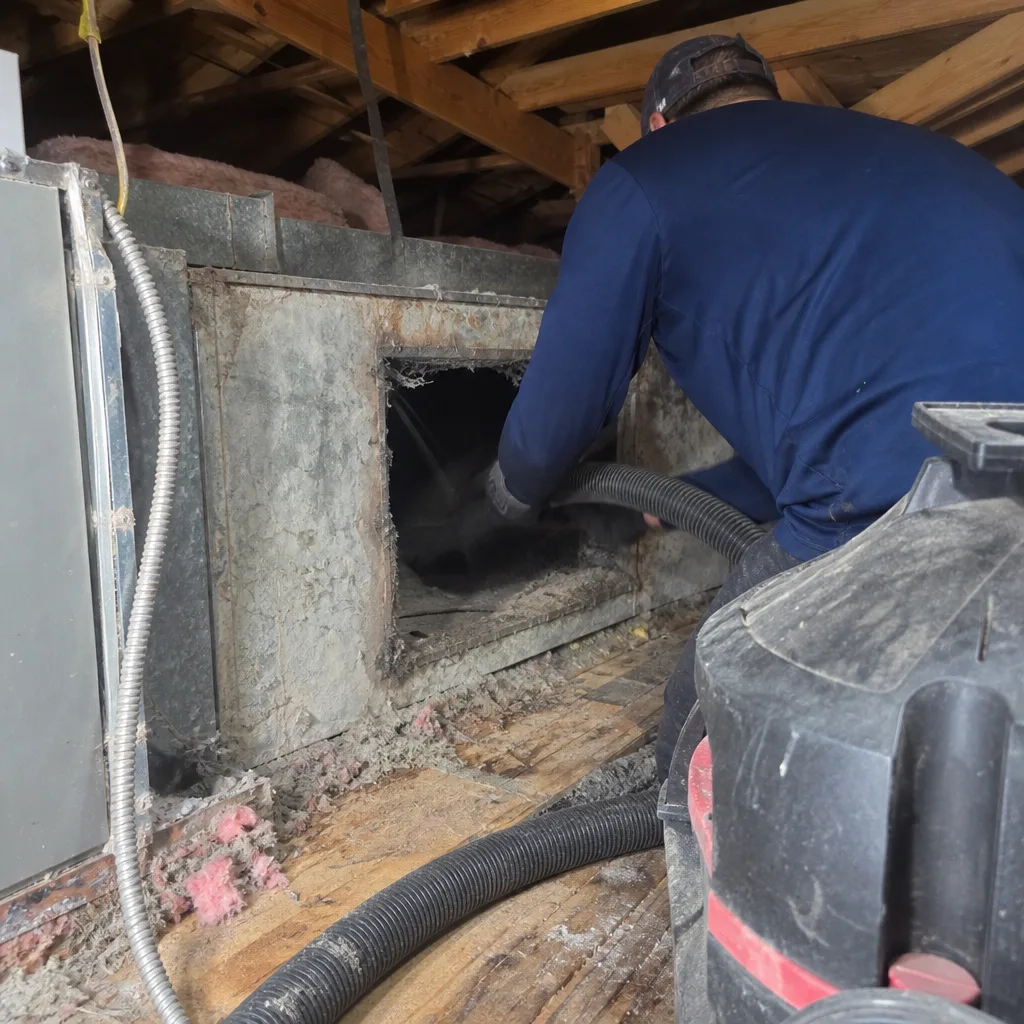 Before
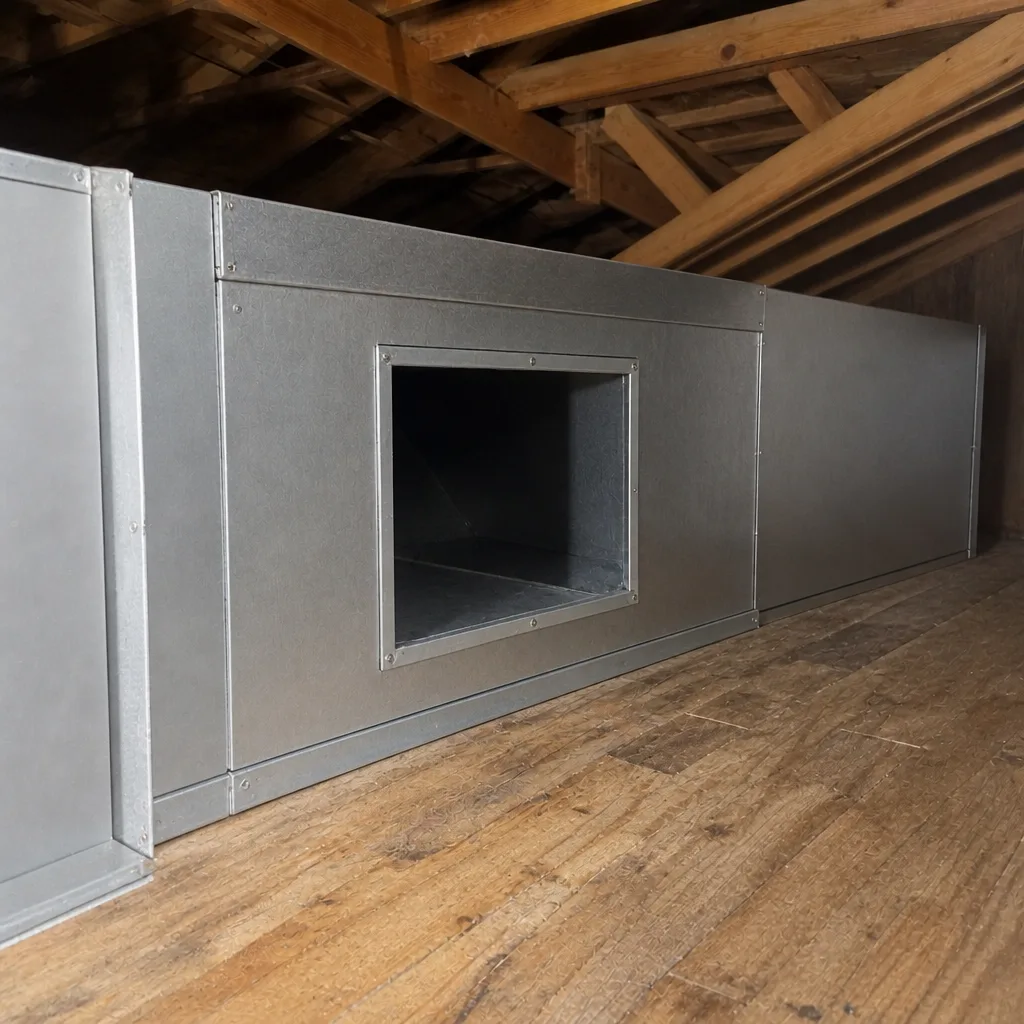 After
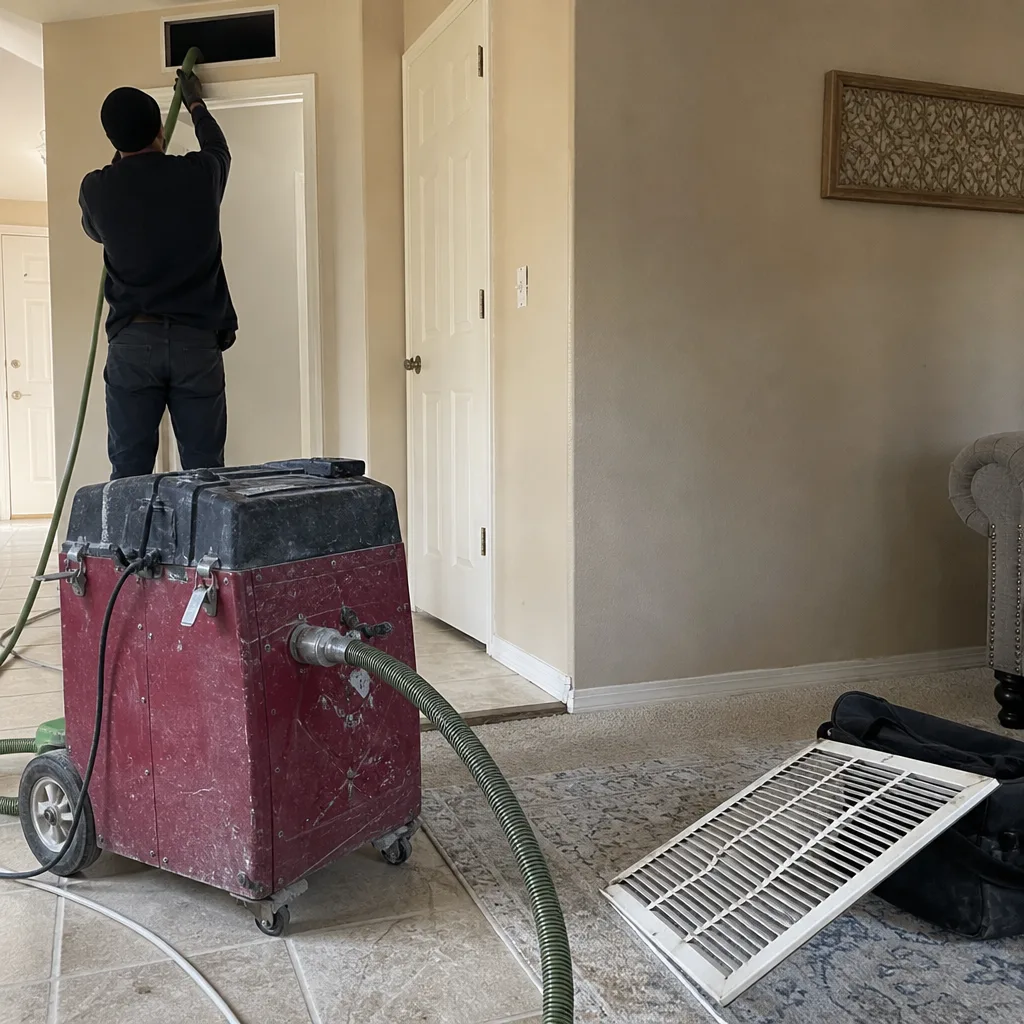 Before
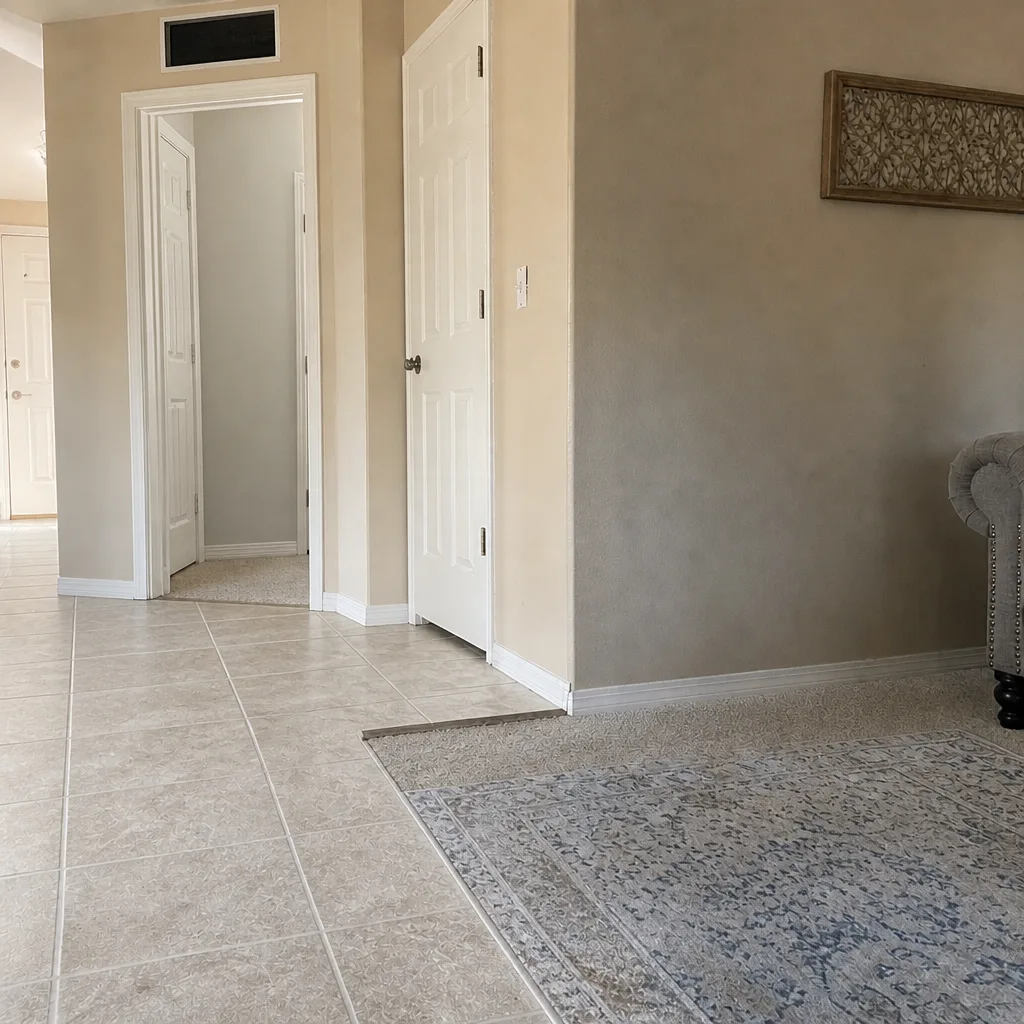 After
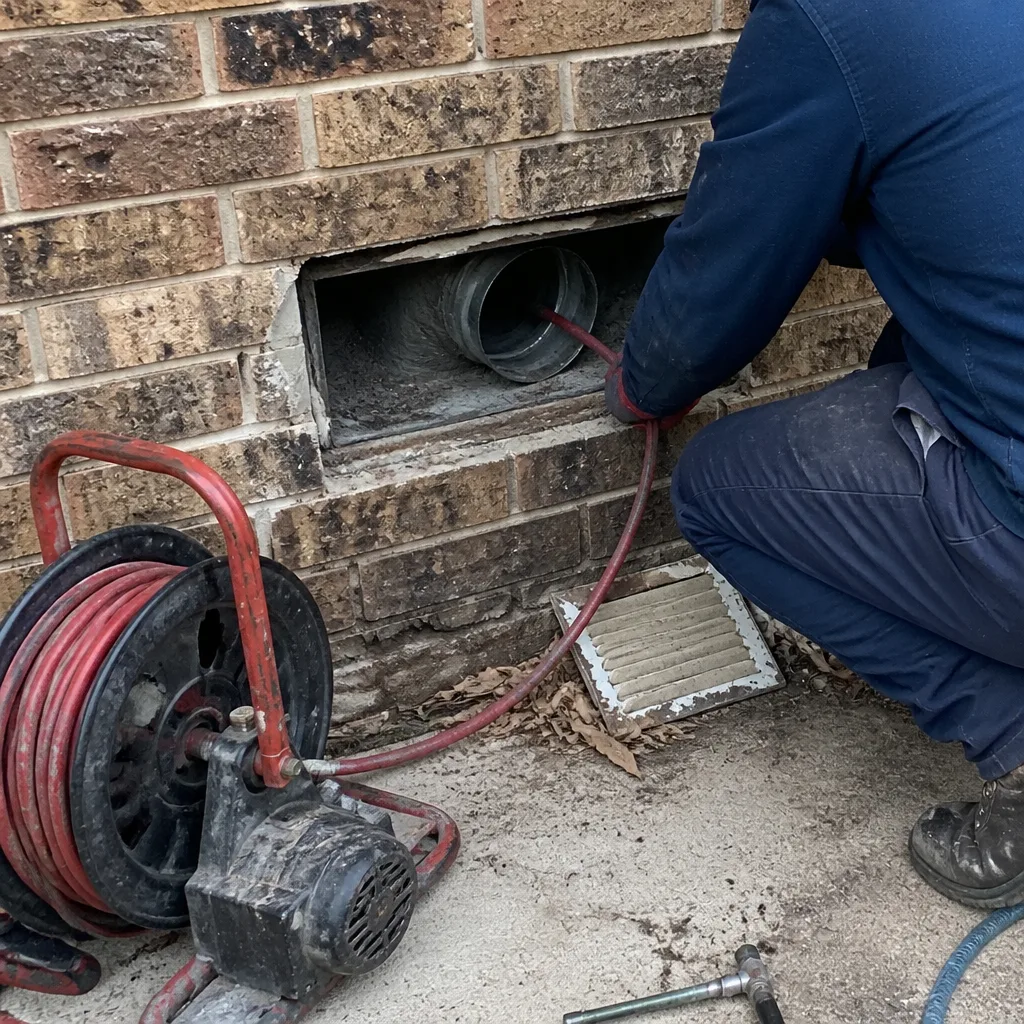 Before
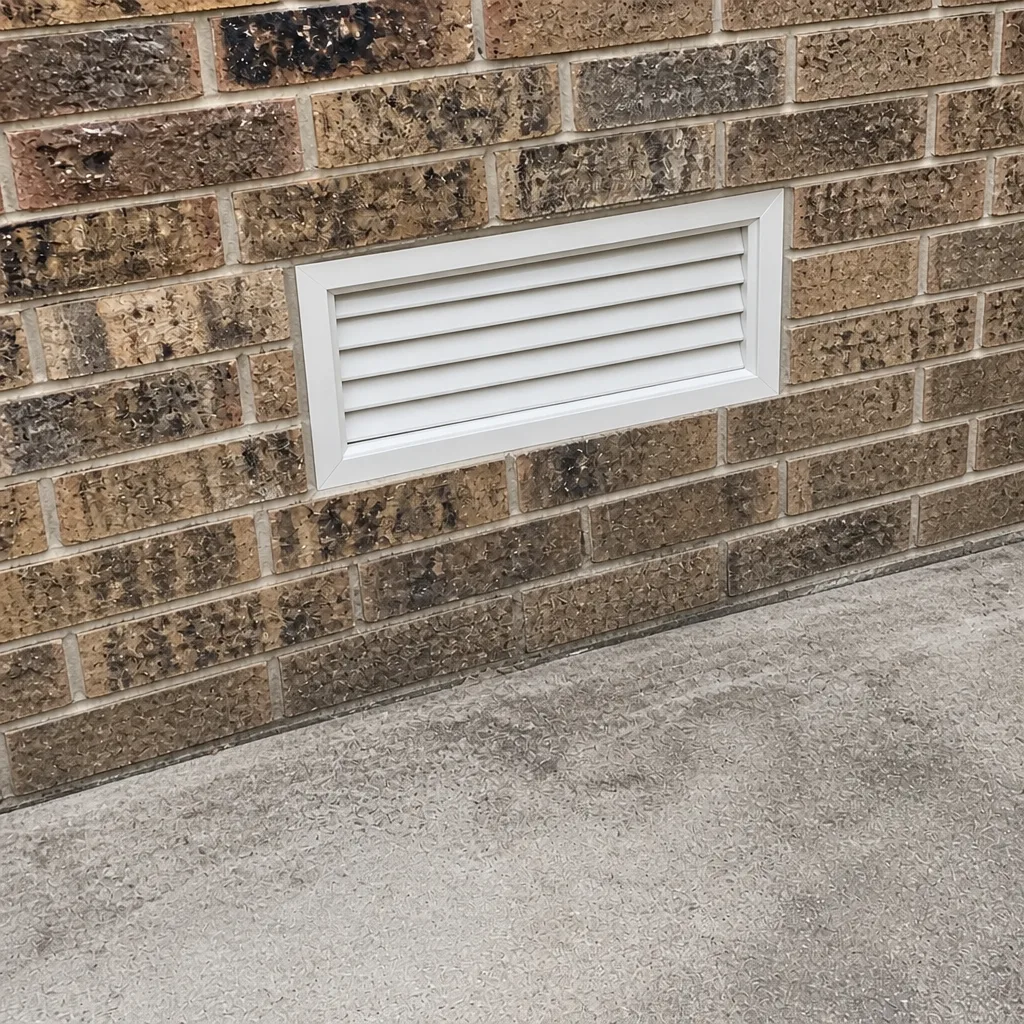 After
When to Call a Professional
Call us when any two of the warning signs in this guide show up together, or when a single sign is severe enough that it’s clearly past the “watch and see” stage. A filter that collapses in weeks, a bedroom more than 3°F off from the house average, musty air at a register that you can’t trace to a moisture source, or a post-storm load that comes back two seasons running, all warrant an inspection. Same if you’re chasing an acrid smell that could point to electrical or heat exchanger trouble: that’s an HVAC technician call first.
Duct Cleaning Lubbock offers free estimates in Lubbock. Call (833) 958-4715. We answer 24/7. Fast dispatch from 7am to 7pm, Sunday through Friday. Our technicians have up to 9 years of experience, they use professional-grade Rotobrush and Nikro equipment on every air duct job, and every job comes with a written flat price before work begins and before-and-after photos of your own ducts when the work is done.
Frequently Asked Questions
The earliest signs are a filter that loads or collapses faster than it used to, room-to-room temperature swings above 3°F, musty or mineral odors at registers, and fine grit accumulating on return grilles after dust storms. Visible blowing dust is usually a late-stage indicator, not an early one. If you see two or three of these together, it’s worth scheduling an inspection. Call (833) 958-4715 for a free estimate.
A dirty filter loads uniformly across its face; a bypassing filter shows debris concentrated at edges, or on the downstream (blower-facing) side. Dust trails around the filter slot on the air handler cabinet are another clear bypass indicator. A bypassing filter needs a properly sized or better-seated filter frame, not just a replacement. Worth a look from a professional before you buy another filter.
Musty air at registers usually points to microbial growth, and the first thing to check is moisture intrusion somewhere in the system: a clogged condensate line, a duct joint near conditioned space that’s been leaking, or a return run through an unconditioned zone. Cleaning addresses the symptom; finding the moisture source addresses the cause. If the musty smell keeps coming back after cleaning, the moisture needs to be found. Call (833) 958-4715 if you want us to take a look.
Check return-air grilles and supply registers for fresh dust films, photograph the filter face the day after and again a week later, and note any register that lost noticeable airflow during the storm. That walkthrough tells you whether the latest dust load was handled by your filter or ended up inside the return ducts. Two seasons of heavy post-storm loads usually warrant a professional cleaning.
Low quotes are typically for a different scope: less time on the system, less contained extraction, and sometimes no evidence of the work. A professional job uses rotary brush and HEPA-filtered vacuum equipment, contains the debris rather than redistributing it, and shows you before-and-after photos of your own ducts. We quote one flat price per system, agreed before work starts, so there’s no surprise invoice once the technician is on site. Call (833) 958-4715 for a free estimate.
It depends on the home, the filter setup, and how much dust the system sees. In Lubbock, the dust-storm footage pushes return ducts toward higher loading than in most climates, so homes here often benefit from a cleaning cycle more often than the generic guidance suggests. If you’re seeing two or three of the warning signs in this guide, that’s a better trigger than a fixed calendar. Call (833) 958-4715 and we’ll help you think through the right interval for your house.
The Bottom Line
Visible dust is the last sign, not the first. The signs that actually matter in a Lubbock home are quieter: filter collapse rate, room-to-room temperature swings above 3°F, the difference between a dirty filter and a bypassing one, and the odor profile at your registers. Add the post-storm walkthrough and you’ve covered the diagnostic ground most homeowners never touch. If two or three of these line up, get an inspection. Cleaning is one issue, structural repair is another, and knowing which is which saves you from paying for the wrong fix. Duct Cleaning Lubbock offers free estimates in Lubbock, one flat price per system agreed before work starts, and before-and-after photos of your own ducts. Call (833) 958-4715. We answer 24/7. Fast dispatch from 7am to 7pm, Sunday through Friday. If you’re still early in the diagnosis, our dryer vent cleaning guide covers the same warning-sign approach for your dryer vent, and it’s worth reading too.
Written by the team at Duct Cleaning Lubbock.