
Last updated November 15, 2026
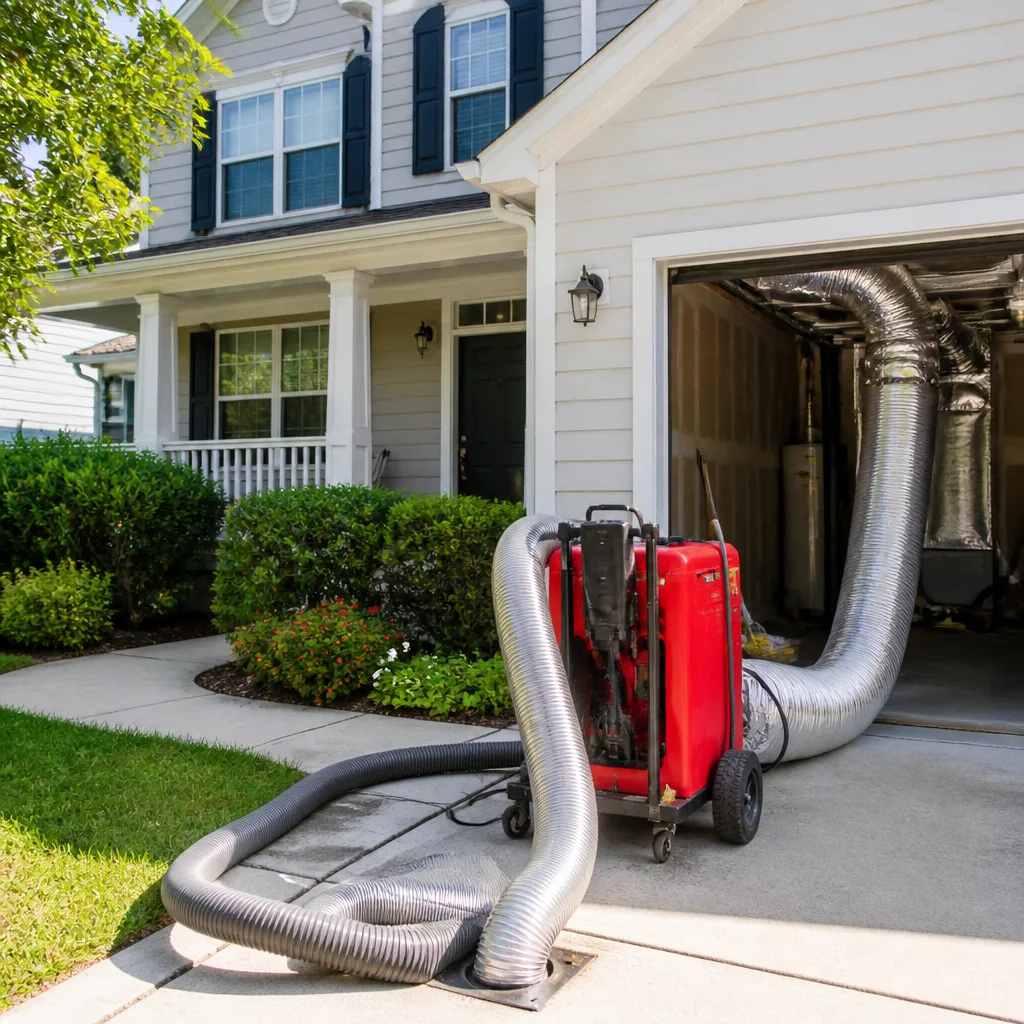 Whole-home duct cleaning
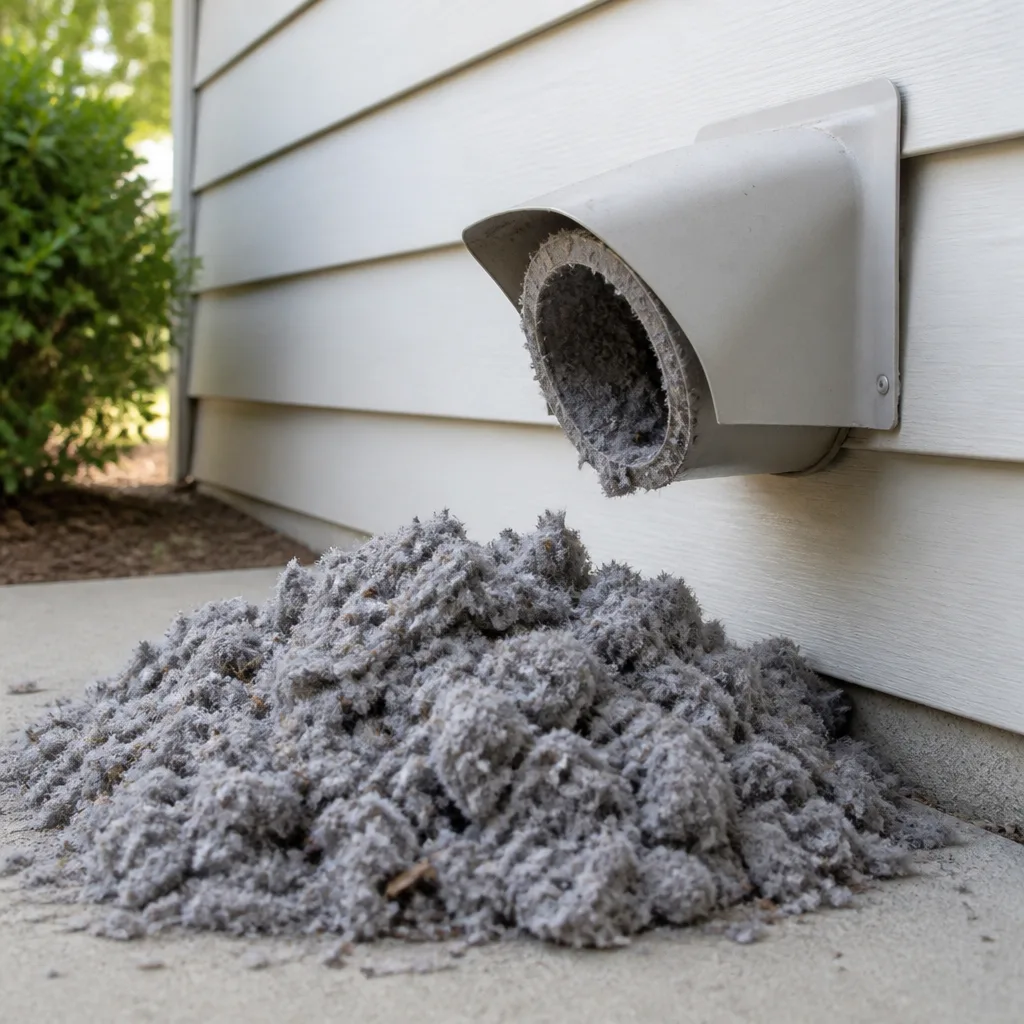 Dryer vent cleaning
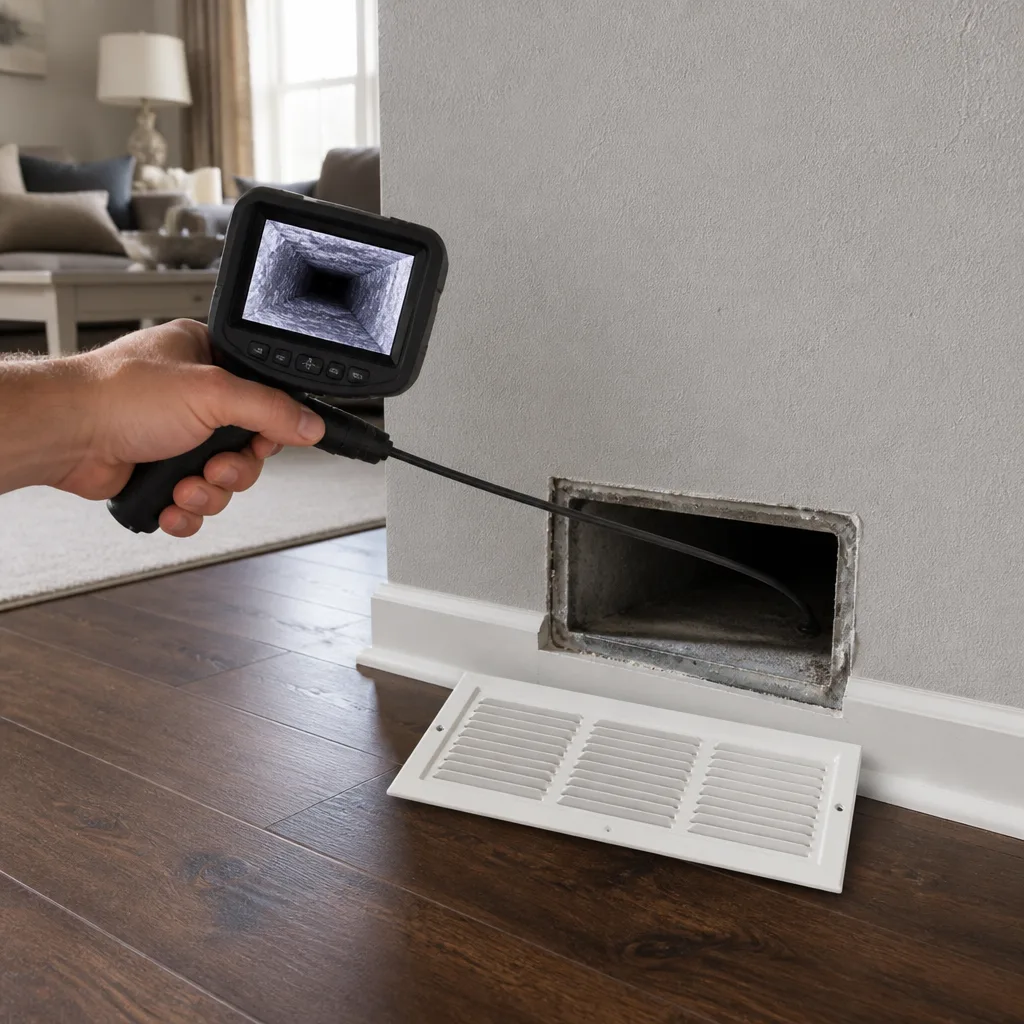 Camera inspection
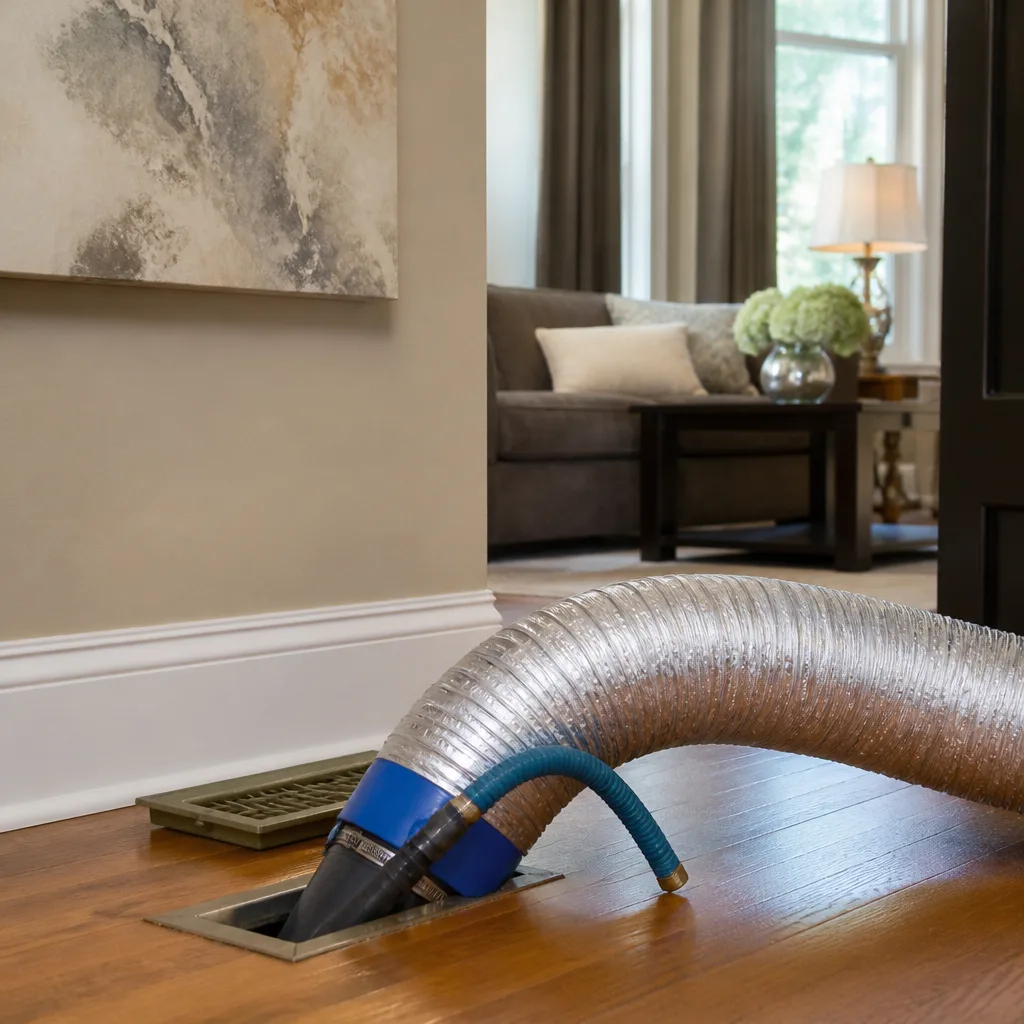 Sanitizing & deodorizing
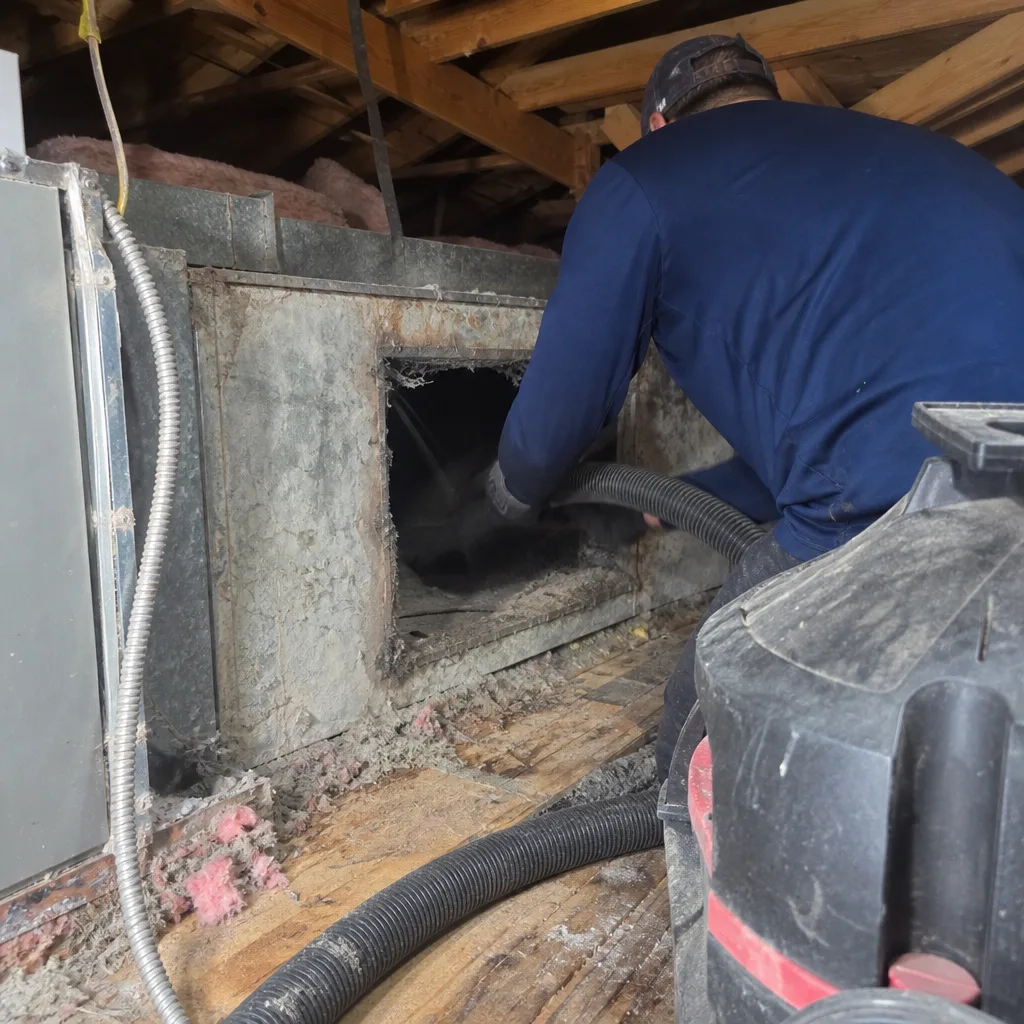
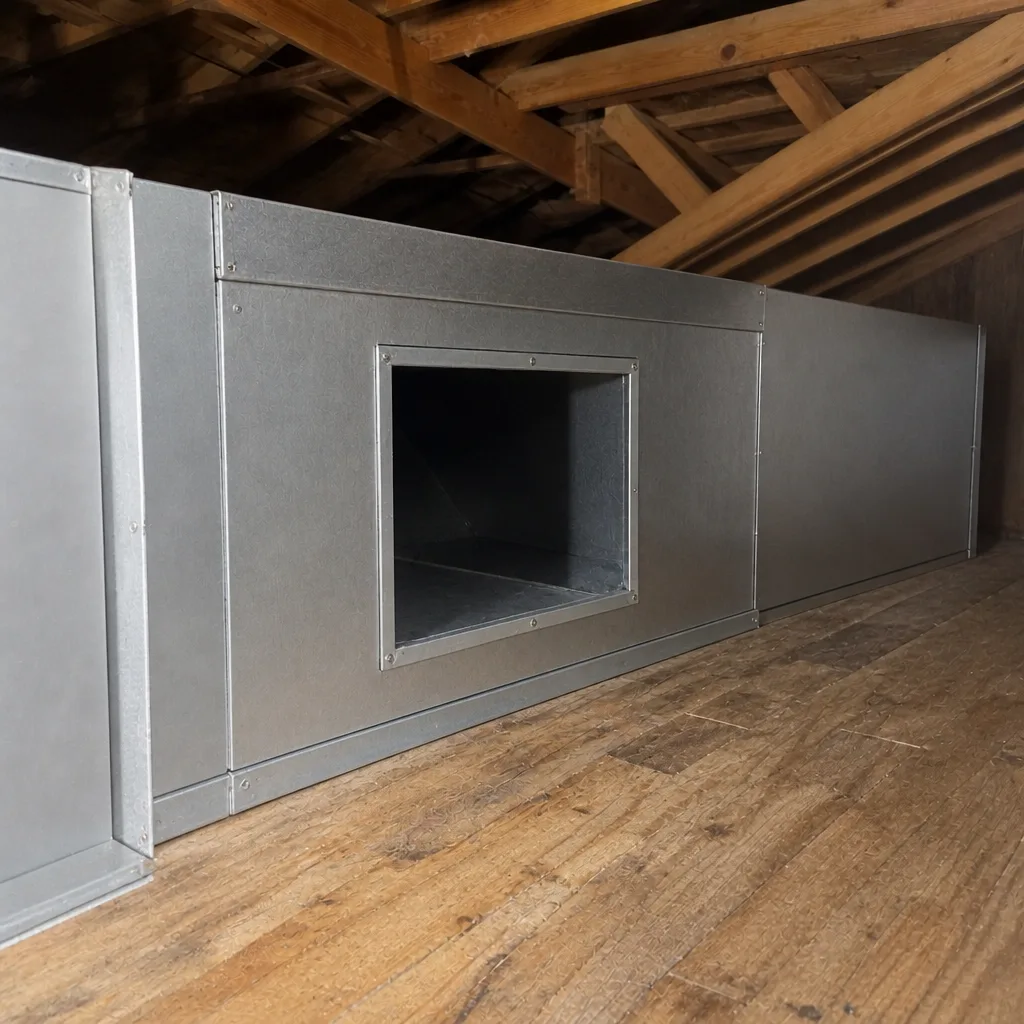
Whole-system duct and dryer vent check with before-and-after photos - you see exactly what came out of your vents
That "$99 whole-house special" is a bait ad - the real number appears once they are in your hallway, or the "clean" is a shop-vac at the register. We photograph the inside of your ducts before and after instead.
Seasonal Air Duct Cleaning Care for Lubbock: Year-Round Homeowner’s Guide
Most homeowners treat duct cleaning as a once-a-year chore, if that. In Lubbock, that thinking misses the point entirely. This city doesn’t have a simple heating season and cooling season; it has four distinct phases, and each one loads your ducts with a different kind of debris. Spring brings cottonwood fiber and agricultural dust through the same six-week window that your system switches from heat to cooling. Summer recirculates fine particulate for 10 to 14 hours a day. Fall adds cotton harvest lint that clings where soil dust won’t. Winter pushes combustion byproducts from your furnace into the same air stream your family breathes. By the end of this guide, you’ll know what each season deposits, what to check, and how to build a 12-month service calendar around how Lubbock actually works.
Quick Answer
The best time for a full professional duct cleaning in Lubbock is late spring, right after cottonwood season settles and before continuous AC runtime begins, paired with a filter change at every season transition. Homes near cotton fields or gin operations often benefit from a second light inspection in late fall. Filter changes should happen every 30 to 60 days during summer, and duct inspections should be scheduled any time you notice visible dust at the registers, a musty smell, or a jump in energy use.
Styles & brands we work with
- Whole-home duct cleaning
- Dryer vent cleaning
- Camera inspection
- Sanitizing & deodorizing
Table of Contents
- Why Lubbock’s Four Seasons Hit Your Ducts Differently
- Spring (March-May): Cottonwood, Field Prep, and the Switchover Window
- Summer (June-August): Constant Runtime and Fine Particulate
- Fall (September-November): Cotton Harvest Lint and Duct Liner
- Winter (December-February): Heating Season and Combustion Byproducts
- Building Your 12-Month Duct Care Calendar
- Common Mistakes to Avoid
- When to Call a Professional
Why Lubbock’s Four Seasons Hit Your Ducts Differently
Most guides about seasonal duct care treat the year as two seasons: heating and cooling. That model was written for colder climates with long, wet winters and short summers. Lubbock doesn’t fit it. The climate on the South Plains moves through four phases that are each distinct enough to require a different maintenance response, and the contaminants they deliver behave differently inside your duct system.
Here’s the pattern we’ve seen after years of duct work around Lubbock:
- Spring delivers fibrous and granular debris in a concentrated burst: cottonwood fluff, mesquite pollen, and soil dust kicked up by agricultural field preparation. The HVAC switchover from heating to cooling happens in the middle of it.
- Summer is when your system runs continuously, sometimes 10 to 14 hours a day, recirculating whatever’s already in the ducts through the same filter loop over and over. Fine particulate accumulates faster.
- Fall brings cotton harvest and gin operations, which release a lint-like particulate that behaves very differently from ordinary soil dust. It clings to duct liner rather than settling in the bottom of the run.
- Winter means heating season, and gas furnaces produce combustion byproducts that enter the same air stream if the heat exchanger or venting has an issue.
That’s four different problems, and they don’t respond to the same cleaning method or the same filter schedule. Understanding which phase your ducts are in, and what that phase deposits, is the whole point of this guide. It’s also why in our experience a single annual service call scheduled blindly often misses the heaviest loading altogether. The right response depends on the season, and the right season depends on what you’re trying to remove.
A quick note on scale: a typical Lubbock home duct system moves several hundred cubic feet of air per minute through the same runs all day. When that air carries cottonwood fiber in April and fine agricultural dust in June, you’re not just breathing it once. You’re filtering it on repeat. Our air duct cleaning work starts with understanding which phase deposited what.
Spring (March-May): Cottonwood, Field Prep, and the Switchover Window
Spring in Lubbock is the highest-debris quarter of the year, and it isn’t allergy season in the conventional sense. It’s three events converging: cottonwood fiber release, agricultural field preparation, and the HVAC mode switchover from heating to cooling. All three hit within roughly six weeks, and all three funnel into your return air.
Cottonwood fiber is the obvious one. It drifts in through open windows, settles on registers, and gets pulled into the return. But the less visible problem is field prep dust. When surrounding agricultural land gets worked up in spring, fine soil particulate lifts into the air column and deposits across the South Plains. Mesquite pollen adds to the load. Your HVAC system, switching from heat to cooling in the same window, starts pulling all of it through the filter and into the supply runs.
Why spring is the best time for a full professional cleaning:
- Debris is fresh and hasn’t compacted. Loose cottonwood fiber and recent soil dust are easier to fully extract with a rotary brush and HEPA vacuum than the same material after a summer of heat cycling.
- The switchover is the natural maintenance point. Your system is transitioning modes anyway, which makes it the logical moment to have the whole air path inspected.
- You clear accumulated winter load before summer runtime. Any debris that built up during heating season gets removed before the AC starts running 10 to 14 hours a day.
- Filter replacement lands cleanly. A fresh filter installed right after cleaning and right before summer gives you full protection during the highest-runtime quarter.
One thing to watch: cottonwood fiber mats on the upstream face of your filter faster than ordinary dust. If you notice the filter face looking fuzzy or gray within a few weeks of installing it, change it early. Don’t wait for the calendar. Our technicians have up to 9 years of experience and will tell you when a filter’s loading pattern suggests the ducts themselves need attention rather than just a filter swap.
If your spring inspection reveals loose joints or a disconnected run that’s been pulling attic or crawlspace air, that’s a repair conversation, not a cleaning one. We clean it, and we can fix it.
Summer (June-August): Constant Runtime and Fine Particulate
Lubbock summers push air conditioning runtime to 10 to 14 hours a day for weeks at a time. That changes the physics of duct contamination. When your system runs continuously, every particle in the return air passes through the filter loop dozens of times a day. Fine particulate that would normally settle gets recirculated over and over, and the filter loads much faster than it does when the system cycles on and off.
The practical consequence is that your filter change interval roughly doubles in frequency compared to spring or fall. What might be a 90-day interval in a mild month becomes a 30 to 60 day interval from June through August. That isn’t a manufacturer recommendation; it’s what continuous runtime demands in this climate.
What to monitor during summer:
- Filter loading rate. Check the filter every 30 days. If it’s visibly gray or matted at the 30-day mark, you’re in a warm-season high-load pattern.
- Register dust. If supply registers start showing a fresh dust film within a week of cleaning, fine particulate is bypassing the filter somewhere in the system.
- Static pressure symptoms. Weak airflow at distant registers, a system that runs longer than usual, or a coil that frosts over can all point to restricted airflow from a loaded filter or partially blocked duct.
- Coil condition. A dirty evaporator coil is a consequence of particulate getting past the filter. If your tech flags it during a summer service call, the ducts likely need attention too.
The other summer consideration is air quality equipment. If your home has a Honeywell or Aprilaire air cleaner or media filter installed, it needs to be matched to the cleaning schedule. These are excellent systems, but they work best when the ducts feeding them are clean and the media is fresh. A high-efficiency filter sitting in a dirty duct system is like a good tire on a bent wheel: it isn’t the part that’s failing.
Summer is not the ideal time for a full cleaning. The system is working hard and the ducts are in heavy use. But it’s the right time to inspect, to keep filters fresh, and to note any symptoms that suggest a cleaning is due as soon as the cooling load eases.
Fall (September-November): Cotton Harvest Lint and Duct Liner
Fall is the season most generic guides get wrong for Lubbock, because it doesn’t look like autumn in most of the country. Cotton harvest and gin operations across the region release a fine lint-like particulate into the air column that behaves completely differently from ordinary soil dust. It’s light, fibrous, and it clings to duct liner rather than settling on the duct floor.
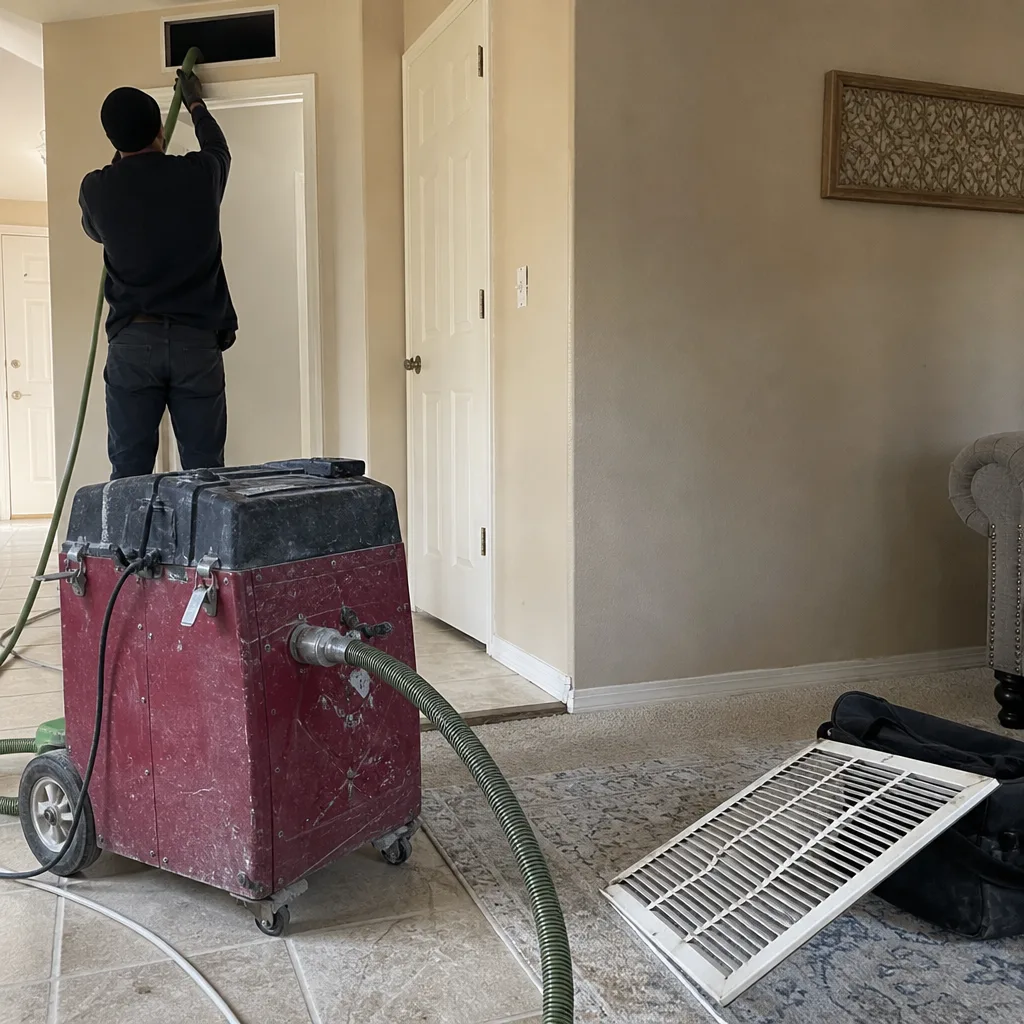
That behavior matters because duct liner (the acoustic and thermal lining on the inside of many duct systems) has a textured surface that catches fiber. Lint embeds into the liner pores and doesn’t release through the same airflow that moves granular dust. A standard vacuum pass or a consumer shop-vac won’t lift it. The right response is a rotary brush agitation paired with HEPA vacuum extraction so the loosened fiber is contained and removed rather than redistributed.
Fall is also when Lubbock homes transition from cooling to heating and a real cleaning opportunity opens up. What to inspect:
- Duct liner condition. A technician can look inside a run and see whether the liner surface is fuzzy with lint or still clean.
- Supply register faces. Lint often shows first on the outer face of the registers where supply air blows directly against the grille.
- Return air path. If your return grilles show persistent gray film even after a filter change, the return run may be carrying liner-trapped lint.
- Filter appearance. Fall lint on a filter face looks fuzzy and fibrous, not gray and grainy. The difference tells you which debris type is dominant.
If your home sits near active cotton fields or gin operations, this is the season for a light inspection at minimum. A full cleaning isn’t always necessary in fall, but a lint-loaded liner is worth addressing before winter heating season pushes dry, warm air through the same runs. We use Rotobrush rotary equipment on every air duct job specifically because it agitates liner surfaces where lint hides. Contained debris extraction uses the Nikro HEPA-filtered vacuum, and for homes near heavy agricultural sources we can bring in Abatement Technologies negative-air equipment to keep loosened particulate contained.
Prefer to know how your home sits? Call (833) 958-4715. We answer 24/7. Fast dispatch from 7am to 7pm, Sunday through Friday.
Winter (December-February): Heating Season and Combustion Byproducts
Winter in Lubbock is mild compared to colder regions, but heating season still changes what enters your air stream. When a gas furnace runs, combustion happens inside a heat exchanger and the byproducts go out through the flue, not into your ductwork. That separation is the whole safety design of the furnace. But if the heat exchanger develops a crack or the venting has an issue, combustion byproducts can enter the air stream your system circulates through the house.
That’s a serious concern. If you ever smell exhaust, notice soot at the furnace, or hear unusual sounds during a heating cycle, shut the system down and call a qualified HVAC or gas technician. Do not try to diagnose a heat exchanger yourself. Duct cleaning removes what’s already in the ducts; it can’t fix a combustion problem, and a cracked heat exchanger is a job for a trained professional before anything else.
What winter duct care looks like when the system is operating normally:
- Seasonal filter change. Replace the filter at the start of heating season so the system runs clean through the coldest weeks.
- Return grille observation. A dust film that develops fast during heating suggests either a filter that’s loading from the HVAC fan or an upstream duct issue.
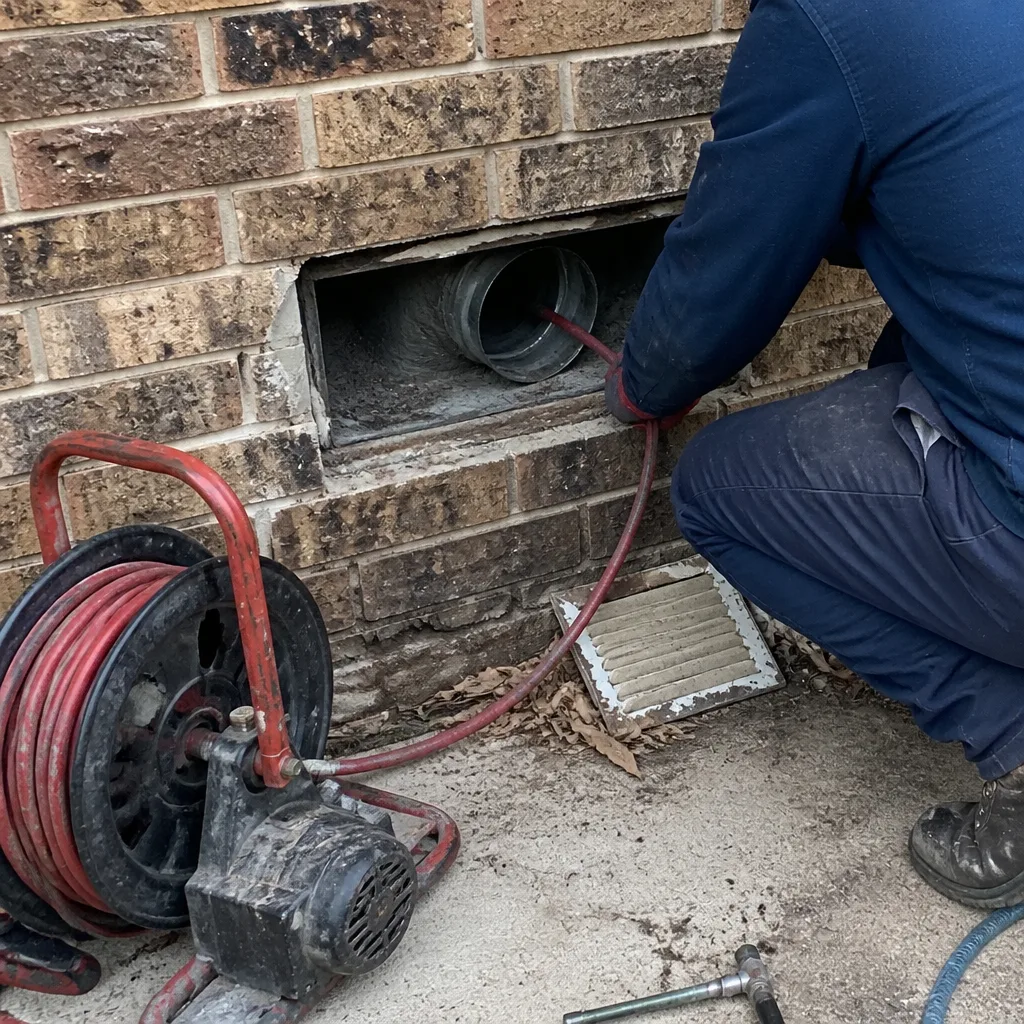
- Dryer vent check. Cooler months mean dryers run more often for heavier laundry, and lint buildup in the dryer vent is a leading cause of residential house fires. Our dryer vent cleaning service addresses that hazard directly, and it’s worth scheduling alongside a winter filter change.
- Register airflow. If some rooms heat poorly compared to others, check whether the supply run is blocked or discharging weakly before assuming the furnace is the problem.
Winter is not the season to schedule a full cleaning in most homes, but it is the season to guard the air quality you already have and to watch for symptoms that point to a spring cleaning. Guardsman lint traps and similar accessories, where installed, help catch what a filter misses but shouldn’t be relied on to substitute for proper duct maintenance.
Building Your 12-Month Duct Care Calendar
Here’s the sequence that works for most Lubbock homes. Adjust the intervals based on your filter loading rate and whether your property sits near cotton fields or gin operations.
Q1 (January-March): Change filter at the start of heating season, then again mid-winter. Watch return grilles for fast dust buildup. Inspect dryer vent and clear any lint accumulation. Schedule spring duct cleaning for late March or early April, before cottonwood season.
Q2 (April-June): Execute the full professional cleaning in late spring. Fresh filter installed immediately after. Cottonwood season is the peak filter-loading window, so check the filter every 30 days through May.
Q3 (July-September): Filter changes every 30 to 60 days during continuous runtime. Inspect supply registers monthly for fresh dust film. Note any airflow weakness at distant registers. If linter-heavy fall season is coming and your home is near cotton fields, schedule a light inspection for early October.
Q4 (October-December): Inspect duct liner and registers for lint loading. Change filter at the start of heating season. Schedule dryer vent cleaning if it hasn’t happened this year. Close the year with a return-grille check and a quick hand test for air leaks at accessible joints.
This calendar isn’t written in stone. If you notice any of the following, move your inspection up regardless of where you are in the cycle:
- Visible dust or lint film at supply registers within a week of cleaning
- A musty or stale smell when the system first comes on
- A sudden jump in filter loading rate
- Unexplained airflow weakness at one or more registers
- Energy bill spikes without a corresponding weather change
And if you haven’t had a proper cleaning in more than two years, don’t wait for the calendar. Start with an inspection. Our team serves homeowners across Lubbock and can assess where your system sits today.
Common Mistakes to Avoid
- Running the same filter all season. A filter that looks fine after 90 days in a mild month can be fully loaded in 30 days during summer runtime. Check the loading pattern, not the calendar.
- Vacuuming the visible duct and calling it cleaning. Consumer shop-vacs reach the first few feet and stir up far more debris than they remove. A rotary brush with HEPA extraction gets the full run, including liner surfaces.
- Assuming lint and dust respond the same way. Fall cotton harvest lint clings to duct liner and needs brush agitation. Soil dust settles and is easier to extract. If you treat both the same, you’ll miss the lint.
- Ignoring a heat exchanger smell as “just the ducts.” Combustion byproducts entering the air stream is a safety issue, not a cleaning issue. Shut the system down and call a qualified HVAC or gas technician.
- Skipping the dryer vent because the ducts were just cleaned. They’re separate systems with separate risks. Dryer vent lint is a fire hazard and needs its own service schedule.
- Cleaning only the furnace area. Lint in a supply run two rooms away won’t be touched by a furnace-side cleaning. Full-system extraction covers every accessible run.
- Treating cheap quotes as comparable. A quote that doesn’t specify the equipment, the extraction method, and the full-run coverage isn’t a cleaning quote. It’s a number.
When to Call a Professional
Most Lubbock homeowners don’t need a full cleaning every time they change the filter, but there are clear signals a professional assessment is warranted. If your registers show a fresh dust film within days of cleaning, if you’ve had a recent renovation or moved into a home with unknown service history, if anyone in the household has recurring respiratory symptoms that seem linked to indoor air, or if your fall inspection shows heavy lint buildup in duct liner, it’s time to call someone with the right equipment.
For a full-system cleaning, the equipment matters more than the price. Our team uses Rotobrush rotary tools paired with Nikro HEPA-filtered vacuum extraction, and has Abatement Technologies negative-air equipment available for higher-contamination situations. Duct Cleaning Lubbock offers free estimates in Lubbock. Call (833) 958-4715 to schedule an assessment. We answer 24/7. Fast dispatch from 7am to 7pm, Sunday through Friday.
See the difference
 Before
 After
 Before
 After
 Before
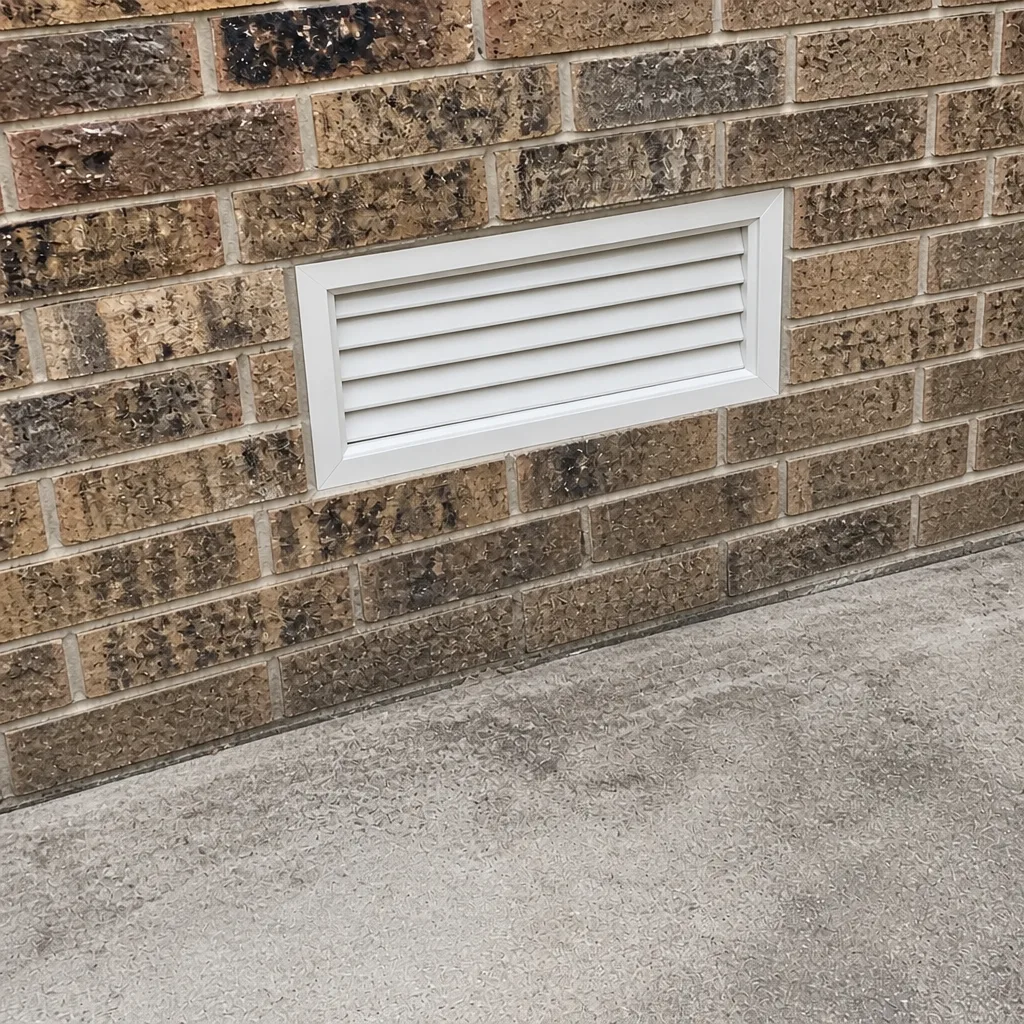 After
Frequently Asked Questions
A full cleaning every two to three years suits most Lubbock homes, with annual service for properties near cotton fields, gin operations, or heavy agricultural activity. The bigger variable is the seasonal filter schedule: change filters every 30 to 60 days in summer and every 60 to 90 days the rest of the year. If your filter is loading faster than that or your registers show fresh dust quickly after cleaning, shorten the interval and get an inspection. Call (833) 958-4715 for a free estimate.
Late spring, right after cottonwood season settles and before continuous AC runtime begins. That timing captures the debris from winter heating season, removes the bulk of cottonwood fiber and spring field-prep dust, and sets you up with clean ducts and a fresh filter going into the highest-runtime quarter. Fall is the second-best window, especially for homes near cotton harvest activity.
Lubbock’s four-season pattern delivers four distinct contaminant types, all into the same duct system. Cottonwood fiber and mesquite pollen in spring, fine agricultural dust and continuous recirculation in summer, lint-like cotton harvest particulate in fall, and heating-season combustion byproducts in winter. Few climates stack this many different debris sources against the same air path. That’s why a year-round calendar with seasonal inspections produces better results than a single annual cleaning.
Not effectively, and for lint-heavy systems it can make things worse. A consumer vacuum pulls loose debris from the first few feet of a run but doesn’t reach deeper sections, doesn’t agitate duct liner surfaces where fall lint traps, and has no HEPA containment to keep what it stirs up from redistributing through the house. Proper cleaning requires rotary brush agitation and HEPA-filtered extraction. Call (833) 958-4715 to schedule an inspection with the right equipment.
Fresh dust at registers within a week of cleaning, a musty smell when the system first turns on, visible lint inside supply runs, unexplained airflow weakness at one or more registers, or a recent renovation that put drywall dust into the air are all signals to inspect. Separately, any exhaust smell or soot near the furnace is a safety signal, not a cleaning one; shut the system off and call a qualified HVAC or gas technician before doing anything else. Call (833) 958-4715 for a free duct assessment.
Removing accumulated fiber, pollen, and fine particulate from the duct system reduces what gets recirculated through your living space, which many allergy-sensitive homeowners notice, especially during spring and fall. It’s not a medical treatment and won’t fix a cracked heat exchanger or a moisture problem, but clean ducts plus a properly rated filter is a real improvement in what your air system moves. Call (833) 958-4715 to talk through your home’s setup.
The Bottom Line
Lubbock’s four-season pattern means duct care here is a calendar, not a checklist. Spring cleaning removes the cottonwood-fiber and field-prep debris that arrives in a concentrated burst. Summer demands shorter filter intervals because of continuous runtime. Fall inspections catch the cotton harvest lint that clings to duct liner and won’t release under ordinary vacuum. Winter changes the filter, inspects the dryer vent, and watches for anything suggesting combustion byproducts, which is a call to an HVAC or gas technician, not a cleaning company. Build these four phases into a year-round schedule, and you’ll spend less time chasing symptoms and more time breathing clean air.
If you’d like an inspection to see where your ducts stand right now, call (833) 958-4715 for a free estimate from the team at Duct Cleaning Lubbock. Contractor-grade equipment, residential pricing, and a cleaning process that includes repair capability when the inspection finds structural issues. We clean it, and we can fix it.
Written by the team at Duct Cleaning Lubbock.